Recycling workers' lives at risk from hazardous waste
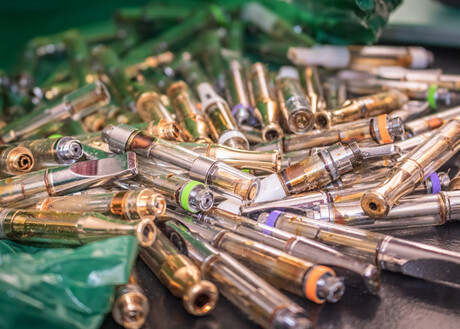
New research from the Australian Council of Recycling (ACOR) shows that hazardous products — including batteries, vapes, electronics and gas cylinders — are being placed in household recycling bins.
The hazardous waste is, in turn, risking recycling workers’ lives, sparking fires and explosions, damaging equipment and threatening recycling facilities.
It is estimated that at least 9400 tonnes of these materials are placed in recycling bins each year, equivalent to around 1 kg for every household with kerbside recycling access.
“Kerbside recycling is part of a remanufacturing supply chain. The glass, metal, paper, cardboard and plastic collected in the yellow bin is meant to be remanufactured into new products and packaging. Household recycling is not built to handle batteries, vapes, gas cylinders or flares,” said ACOR CEO Suzanne Toumbourou.
“When those items go into the wrong bins, they put workers’ lives at risk, damage equipment and turn a recyclable stream into a hazardous waste problem.”
ACOR’s research found that Australians incorrectly place an estimated 13.8 million loose batteries into recycling bins annually, including lithium-ion batteries which pose the greatest fire risk.
Other key findings from the research found consumer electronics with embedded batteries make up around 90% of the hazardous materials examined by weight, from e-bikes and power tools to phones, toys, novelty light-up products and electric toothbrushes. Operators also reported rising numbers of vapes and nitrous oxide canisters, with one facility finding around 1000 nitrous oxide canisters a month. Gas cylinders and canisters can explode when damaged.
Australia’s kerbside recycling system is designed to only process recyclable packaging, including glass bottles and jars, metal cans, paper, cardboard and rigid plastic containers. It is not built for these hazardous materials.
The list of hazardous materials that should never be placed in recycle bins includes:
- loose batteries
- vapes
- mobile phones
- tablets
- battery-powered toys
- power tools
- electric toothbrushes
- e-bike and e-scooter batteries
- gas cylinders
- butane canisters
- nitrous oxide canisters
- flares
- fireworks
The costs for a recycling business to correctly dispose of these materials is estimated to be between $5.2 million to $8 million nationally each year, before downtime, equipment damage, labour, insurance, safety training and lost productivity are counted.
Toumbourou said the findings point to the need for urgent action to keep hazardous products out of kerbside recycling and expand safe collection pathways.
“We need clearer public education on what belongs in the yellow bin, better access to safe collection options for batteries, e-waste and hazardous products, and Extended Producer Responsibility schemes that hold manufacturers accountable for the true cost of managing their products,” Toumbourou said.
Check Recycle Mate to find the right safe disposal option near you.
Smart bin receives 2026 Australian Good Design Award
Rather than functioning as a conventional waste bin, it works as an IoT-enabled return point...
AI solar smart bins to end Vic fixed-route rubbish runs
Installation of the smart bins will be completed by the end of November, with 500 bins to be...
Qld Govt backs new resource recovery event
The event is gaining momentum among leading industry associations committed to advancing resource...