The energy advantage: The next growth opportunity for Australia and New Zealand
By Colette Munro, Zone President, Schneider Electric Pacific
Friday, 31 July, 2026
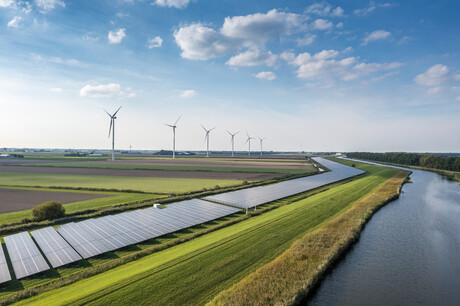
What connects grid-scale batteries, petrol prices, and rooftop solar?
They all link to a striking contradiction taking hold across Australia and New Zealand: energy production and electricity generation are at record highs1, but so are concerns about supply, particularly affordability, reliability, and grid capacity.
These concerns are having a tangible and negative impact on local investment and productivity.
Schneider Electric’s 2026 Energy Technology Pulse Report shows a clear disconnect between business ambition and confidence. Most business leaders are confident about economic growth, yet nearly 40% across Australia and New Zealand have delayed investments that would support growth due to fears around energy costs, supply concerns, and infrastructure limitations.
The research also points to a broader trend: energy has moved from the facilities team to the boardroom. More senior business leaders are prioritising access to reliable, affordable, and sustainable energy to improve productivity and competitiveness.
Key takeaways
- Investment remains strong, with more than three-quarters of businesses in Australia and New Zealand maintaining or increasing spending.
- But energy instability is slowing growth, with nearly 40% of businesses delaying or scaling back expansion plans.
- A majority see the energy transition as a competitive advantage, with more than 65% of leaders believing it will strengthen business performance.
- Energy efficiency is a major investment priority across both Australia and New Zealand.
Energy for growth
The encouraging news is that despite economic pressures, business confidence is solid. Three-quarters of organisations are maintaining or increasing investment levels, with 77% in Australia and 74% in New Zealand committed to spending.
Many organisations recognise that energy strategy is now business strategy. Decisions about electrification, efficiency, and energy technology are becoming foundations for long-term plans.
As a result, most leaders see the energy transition as an opportunity, with 66% of Australian respondents and 71% from New Zealand believing accelerating the transition will increase competitiveness. After automation and AI, energy efficiency ranks as one of the top investment priorities (51% in AU and 46% in NZ).
The costs of uncertainty
However, across Australia and New Zealand, around half of businesses (50% AU, 48% NZ) say energy challenges will reduce profitability. Energy instability — including volatile costs, supply concerns, and infrastructure limitations — continues to disrupt business confidence, with 4 in 10 businesses scaling back plans as a direct result of uncertainty around energy prices and supply.
The economic impact extends well beyond higher energy bills.
Reduced profitability constrains investment, delaying innovation, technology upgrades, and expansion plans. Over time, these decisions reduce productivity and competitiveness further.
For Australian organisations, these financial pressures are also arriving alongside new compliance demands, including climate disclosure requirements and the need for more reliable sustainability data. The good news is that advances in Energy Technology mean operational, process, and energy insights can now be seen in one place. By connecting power systems, industrial processes, and operations data, leaders can consolidate costs and manage compliance, performance, reliability, and energy use together, rather than as parallel programs.
Investment is changing shape
The research also shows businesses are changing where they invest. Energy efficiency has emerged as one of the highest priorities across both markets, alongside automation, AI, and digital technologies.
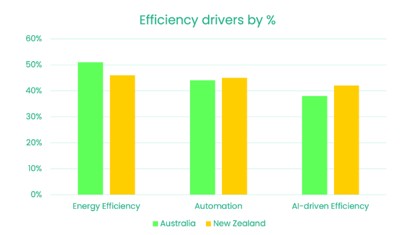
Leaders are focusing on areas where better visibility can increase the value of existing assets, by using Energy Technology to optimise energy consumption, improve operational performance, and manage risk.
Investments in software, data, automation, and AI can improve near-term performance while also building the foundation for future growth.
Take La Trobe University, which reduced emissions by 75%, increased visibility into energy use and performance, and reduced costs, in part through software that managed, monitored, and automated energy consumption, supporting new on-site solar generation and switchgear.
A bright spark on the horizon
Geography, scale and access to capital have long shaped competitiveness. Increasingly, so does the way an organisation manages energy. Leaders that improve efficiency, increase operational visibility, and accelerate electrification are strengthening their ability to control costs and adapt to changing market conditions. They are also positioning themselves to respond more effectively to customer expectations, regulatory requirements, and future energy demands.
The debate is no longer about whether energy matters to business performance. That question has already been answered, so the real decision is how organisations respond.
The businesses best positioned for the years ahead will be those that use energy most intelligently.
With strong renewable resources and a history of technology adoption, Australia and New Zealand have a clear opportunity to turn Energy Technology into a driver of productivity, resilience and growth over the next decade.
[1] https://www.energy.gov.au/energy-data/australian-energy-statistics/electricity-generation
Power and cooling readiness emerge as barriers to scaling AI
Technology decision-makers say Australia needs further investment in digital and energy...
Why production flexibility matters to Australian food and beverage manufacturers
Automation is embedded across much of food and beverage production, but its flexibility varies...
A practical path to electrifying food manufacturing
For producers assessing energy costs, supply exposure and emissions, reducing dependence on gas...