New method recycles mixed plastic packaging sans chemicals
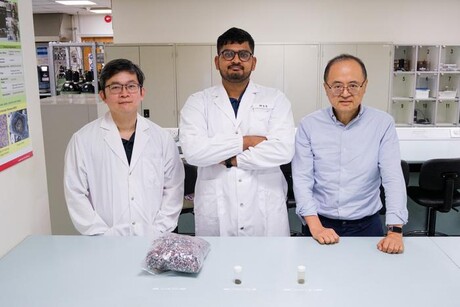
As global plastic production is projected to reach 736 million tonnes by 2040, scientists from Nanyang Technological University, Singapore (NTU Singapore) have developed a method to recycle mixed plastic packaging without using harmful chemical solvents.
Mixed plastic packaging is made up of several different plastics bonded tightly together, making it challenging to recycle. Even if recycled, the material is often of low quality and has little commercial value.
The research team from NTU Singapore’s School of Materials Science and Engineering and Nanyang Environment and Water Research Institute (NEWRI) has introduced a process called depolymerisation-induced polymer separation, or DIPS. The method selectively breaks down one type of plastic in mixed plastic packaging while leaving the other plastics intact, allowing each material to be recovered and reused.
“We’re seeing more mixed plastic packaging used in everyday food products, but recycling it safely and efficiently is still a major challenge. Our team set out to tackle this by developing a practical, scalable way to separate these materials without using harmful solvents,” said lead investigator Professor Hu Xiao, who is also the Programme Director for Sustainable Chemistry and Materials at NEWRI.
Study co-author Dr Liang Yen Nan, who is also Senior Research Fellow, NEWRI, said, “One of the biggest hurdles in plastic recycling today is the lack of a viable way to deal with mixed plastics. This project was driven by that challenge, and our goal is to help move the industry closer to a solution that works in the real world.”
The DIPS method uses a technique called reactive extrusion, a solvent-free, continuous industrial process in which an extruder machine — a device commonly used in manufacturing to melt and shape plastics — doubles as a chemical reactor.
During processing of mixed plastic packaging, polyethylene terephthalate (PET) reacts with glycerol and is selectively broken down into smaller molecules. This PET-derived material has a different physical and chemical nature from the original plastic, causing it to naturally separate from polypropylene (PP).
The separation happens automatically during processing, driven by differences in the materials’ polarity and viscosity. The entire process runs at room pressure and without any solvents, making it safer and potentially more cost-effective than conventional chemical recycling approaches.
In laboratory tests, the recovered PP retained mechanical properties close to those of virgin plastic, achieving up to 90% of its original tensile strength under optimal conditions.
Using samples from post-industrial mixed packaging waste, the method successfully separated the plastic components and produced better material quality compared to conventional mechanical recycling approaches.
While the recovered PET cannot be directly reused, it contains chemical groups that make it potentially useful for higher-value applications such as specialty materials to replace epoxy used in wind turbine blades or for conversion into a monomer (a building block of a polymer).
The researchers believe the DIPS approach can be extended to other mixed plastic combinations and scaled up using commonly used industrial extrusion equipment.
“Our process attempts to bridge the gap between laboratory research and industrial application. By simplifying separation and eliminating solvents, we aim to make plastic recycling more economically viable and environmentally sustainable,” said first author Kathirvel Periasamy, a PhD student and Provost Graduate Awardee under NTU’s flagship Interdisciplinary Graduate Programme.
If mixed plastic waste were efficiently recycled at scale, it could unlock an economic value estimated at more than US$250 billion annually.
The research team plans to collaborate with industry partners to validate the approach under scaled-up conditions and welcomes interest from potential collaborators.
The research has been published in Industrial & Engineering Chemistry Research.
Recycled Content Verification tool by GECA and Rebuilt
The tool provides an accessible pathway for organisations to substantiate recycled content claims...
Emerson Rosemount QX1000 continuous gas analyser
Emerson has released its Rosemount QX1000 continuous gas analyser, suitable for use in continuous...
QED Huberg SEM5000 portable methane detector
The Huberg SEM5000 is a field-proven portable methane detector for landfill surface...