From Vision to Impact: How Epson is turning environmental ambition into measurable action
As the global sustainability agenda accelerates, the challenge facing multinational organisations is no longer defining ambition, it is delivering measurable, system-wide change. For Epson that ambition is clearly articulated in its Environmental Vision 2050, “to become carbon negative and underground resource free, while enriching communities and operating within the planet’s ecological limits”. What distinguishes Epson’s approach is how this long-term vision is being translated into tangible outcomes both globally and across Australia and New Zealand.
A global blueprint for operating within planetary boundaries
At the heart of Epson’s strategy is a recognition that economic activity must align with finite planetary resources. Their Environmental Vision 2050 sets a dual objective: eliminate net greenhouse gas (GHG) emissions and decouple growth from the extraction of virgin underground resources.
Decarbonisation in practice
Epson’s decarbonisation roadmap is grounded in a clear hierarchy: reduce energy demand, transition to renewable energy and remove residual emissions.
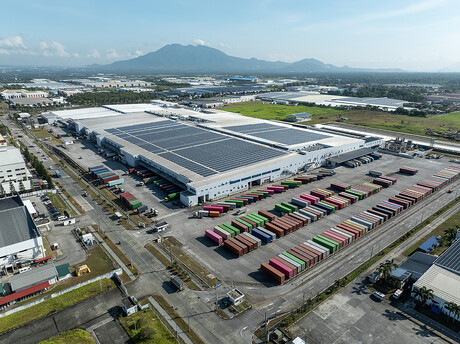
A major milestone has already been achieved. As of December 2023, Epson transitioned to 100% renewable electricity across all global sites, covering approximately 876 GWh of annual consumption. This shift alone reduced emissions by around 400,000 tonnes annually — a substantial step toward its carbon negative target.
This transition also required region-specific solutions including:
- Long-term renewable energy agreements in Japan
- Geothermal and hydroelectric power adoption in the Philippines
- Biomass energy integration in Indonesia
Beyond its own operations, Epson is working to influence emissions across its value chain, particularly Scope 3 emissions, by engaging suppliers and redesigning products to consume less energy during use.
Designing out emissions
Product innovation is central to Epson’s strategy. Technologies such as heat-free printing eliminate the need for heat in the ink ejection and overall printing process, significantly lowering energy consumption during operation.
Meanwhile, high-capacity ink tank systems reduce consumables and waste, extending product life cycles and minimising environmental impact for customers.
Epson also quantifies these downstream benefits as part of its “environmental contribution”, a metric that captures how its products help reduce emissions beyond its own footprint.
Closing the resource loop
In parallel with decarbonisation, Epson is rethinking material use through a circular economy lens. Its goal of becoming underground resource free by 2050 is underpinned by the three aforementioned priorities of reducing resource inputs, eliminating waste and maximising the use of sustainable materials.
Epson’s circular innovation in action
- Dry Fibre Technology enables the recycling of paper and textiles into new materials such as packaging, insulation and cushioning without the need for water-intensive processes.
- Metal recycling initiatives transform used silicon wafers and manufacturing waste into reusable metal powders for applications in electronics and automotive components.
These innovations contribute to Epson’s target of achieving a 100% sustainable resource rate incorporating renewable, recycled and less-depletable materials.
Strengthening nature stewardship
Looking ahead, Epson is expanding its environmental focus beyond carbon and materials to include nature-related impacts. From 2025, the company has aligned with the Taskforce on Nature-related Financial Disclosures (TNFD) integrating biodiversity, water use and ecosystem health into its risk management and reporting frameworks.
By identifying priority areas such as chemical use, water dependency and resource circulation Epson is establishing measurable targets to reduce pressure on natural systems while exploring opportunities for ecosystem restoration.
Localising impact in Australia and New Zealand
While global frameworks set direction, implementation at the regional level is critical. In Australia and New Zealand Epson’s sustainability strategy reflects both alignment with global goals and responsiveness to local conditions.
Understanding the emissions challenge
As above Epson A/NZ’s FY24 data reveals that the majority (99.99%) of its emissions fall within Scope 3*, underscoring the importance of value chain engagement. These emissions are largely embedded in purchased goods, logistics and product use highlighting where the greatest opportunities for impact lie.
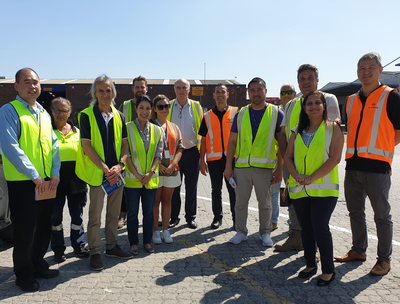
To address this, Epson A/NZ has started engaging with key local suppliers, including logistics partners, to identify opportunities to reduce emissions and manage climate-related risks.
Rethinking logistics
A practical example of emissions reduction in action is Epson Australia’s partnership with DP World. Since March 2025 inbound freight arriving at Port Botany has been shifted from road to rail for transport to their Yennora warehouse.
This modal shift reduces emissions associated with freight movement and demonstrates how operational decisions can directly influence Scope 3 outcomes.
Reducing operational footprint
Epson A/NZ has also made significant strides in reducing its direct environmental impact during their last fiscal year including:
- A 60% reduction in office footprint following the relocation of its Sydney headquarters resulting in a 25% decrease in electricity consumption across its Australia and New Zealand operations
- A 29% reduction in waste at Sydney facilities, driven by improved recycling and material reuse practices at its head office warehouse facilities**
- An increased commitment to circularity via their long-standing partnership with Planet Ark through the Cartridge 4 Planet Ark recycling program, where all collected Epson consumables are diverted from landfill (zero waste to landfill). To date, Epson have recycled over 7 million units through this program
These initiatives also reflect the company’s broader commitment to operational efficiency and resource optimisation.
Supporting local manufacturing transformation
Epson’s partnership with the Australian Fashion Council (AFC) is a great example that highlights the role of technology in reshaping local industries. By advancing on-demand textile printing Epson and the AFC aim to improve local manufacturing, further innovation and develop digital transformation.

To that end Epson are also working closely with the AFC on a feasibility study for a ‘smart factory’ and shared manufacturing hubs. These initiatives are similar to those they have already developed and implemented with The Social Outfit and Citizen Wolf where Epson’s direct-to-fabric/direct-to-garment/film digital printing technologies play a part in the overall production workflow.
Epson is particularly motivated in helping accelerate the adoption of advanced digital technologies that improve resource efficiency, reduce material waste, unlock new opportunities and create the jobs of the future. Epson’s collaboration with the AFC also aims to reduce water and chemical use compared to traditional dyeing processes, minimise waste associated with overproduction and cut emissions linked to offshore manufacturing and transport.
From vision to systemic change
Epson’s approach demonstrates that achieving sustainability at scale requires more than incremental improvements. It demands systemic transformation across energy, materials, products and partnerships.
Globally, the company has made measurable progress in renewable energy adoption and circular innovation.
Locally, in Australia and New Zealand, it is translating these principles into targeted actions that address regional emissions profiles and operational realities.
The result is a cohesive strategy that connects long-term vision with near-term impact, positioning Epson as a case study in how global sustainability commitments can be effectively operationalised.
As the window for climate and environmental action narrows, this ability to bridge ambition and execution will define the leaders of the next decade.
Epson’s journey suggests that with the right combination of technology, collaboration and accountability, it is possible to operate within planetary boundaries while continuing to deliver economic and social value.
More reporting, more accountability
Epson Australia recently released its second, annual Sustainability Impact Report. To see highlights, details, a summary of and to download the report in full go to: https://www.epson.com.au/Impact-Report/
*Due to zero market-based Scope 2 emissions, achieved through the purchase of 100% renewable electricity.
**Waste data is currently only collected at our HO and Yennora warehouse, which produces the majority of waste (estimated >95%) across Australia and New Zealand.
How digital textile printing can rebuild local manufacturing in Australia
Digital print localises production, insulating brands from global supply volatility while...
Rittal RiLineX — A standardised 60 mm busbar platform engineered for AS/NZS 61439 switchboards
It is designed to flex with real world requirements while staying consistent enough to repeat...
The sustainability opportunity in HVAC&R is bigger than products: it's performance, people and follow-through
The biggest conversations aren't about whether emerging innovations exist, they're about...