Replicating photosynthesis to produce sustainable fuel
22 August, 2014Researchers from The Australian National University (ANU) have successfully replicated one of the crucial steps in photosynthesis, opening the way for biological systems powered by sunlight which could manufacture hydrogen as a fuel.
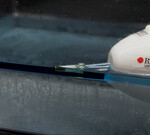
Water tractor beam could contain oil spills
19 August, 2014Physicists from The Australian National University (ANU) have created a tractor beam on water, which they can use to manipulate floating objects at will.
Cigarette butts could improve energy storage
11 August, 2014Scientists from Seoul National University have converted cigarette butts into a high-performing material that could be integrated into computers, handheld devices, electrical vehicles and wind turbines to store energy.
Continental developing tyres from dandelions
07 August, 2014Tyre manufacturer Continental is working with the Fraunhofer Institute for Molecular Biology and Applied Ecology (IME) with the objective of using latex from the roots of the dandelion as a commercially viable substitute for natural latex from rainforest plantations.
New molecule brings hydrogen storage closer
28 July, 2014Australian and Taiwanese scientists have discovered a new molecule that is bringing the science community closer to overcoming one of the barriers to using hydrogen fuel cells as a viable power source for cars.
Tourists take a holiday from sustainability
22 July, 2014A University of Queensland (UQ) study has found that people who have environmentally friendly lifestyles at home often engage in environmentally harmful behaviour when they go on holiday.
Where are all Australia's trees?
17 July, 2014A new report from 202020Vision has analysed tree canopy cover in Australia's most urban, dense, local government areas (LGAs), revealing the complexities and barriers in addressing increased greenery.
Clean-up catalysts convert biodiesel waste into chemicals
02 July, 2014Researchers from Rice University have found that palladium-gold nanoparticles, found to be suitable catalysts for cleaning polluted water, are also able to convert biodiesel waste into valuable chemicals.
Farm robot developer wins award
26 June, 2014A robotics expert from the University of Sydney, Professor Salah Sukkarieh, has been announced Researcher of the Year at the 2014 AUSVEG National Awards for Excellence. Professor Sukkarieh was recognised for his work on intelligent farm robots, in particular the 'Ladybird'.
Paler pavement to cool our cities?
17 June, 2014The City of Sydney is conducting a trial to explore the potential for light-coloured pavement to reduce temperatures in surrounding areas.
UTS raises the roof for sustainability
16 June, 2014The University of Technology, Sydney (UTS) unveiled its new Faculty of Engineering and IT (FEIT) building on 12 June. The 44,000 m2 facility is the university's first building to offset its energy usage from renewables.
Curtin University promotes sustainability institutes
28 May, 2014 by Lauren DavisCurtin University recently held a sustainability showcase that promoted the work being conducted at its various research centres. Four clips from four centres and institutes were created and uploaded to YouTube.
Man-made chemicals are poisoning us, says author
26 May, 2014Science writer Julian Cribb FTSE has released the book Poisoned Planet: how constant exposure to man-made chemicals is putting your life at risk.
$1m investment in plastic additives company
19 May, 2014University of Queensland (UQ) start-up company TenasiTech, a developer of innovative plastic additives, has received $935,000 from its latest investment round.
Researchers rehabilitate bauxite residue
09 May, 2014Researchers from The University of Western Australia, working with Alcoa of Australia, are breaking new ground on finding ways to transform bauxite residue into healthy soils. Their work has been published in the journal Ecological Engineering.