Digital water treatment — real-time data for safe and efficient processes
By Markus Sharpe, Director of Digital Products & Measurement and Control Technology, ProMinent GmbH
Thursday, 23 April, 2026
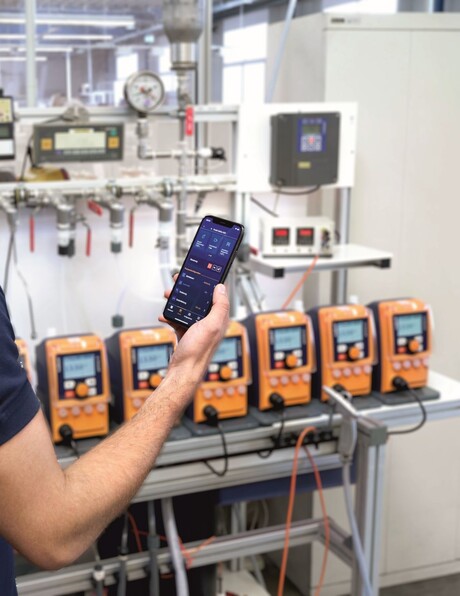
As operators, engineering companies and technology providers exchange views at IFAT, one topic is increasingly taking centre stage: digital process control in water treatment. The focus is less on individual components and more on the question of how measurement data, operating conditions and documentation requirements can be recorded in a structured manner and utilised effectively. Increasing regulatory requirements, more complex plant structures and limited personnel resources are putting pressure on operators in both potable water treatment and wastewater treatment.
Digital systems offer a solution here. They make process data available in real time, provide transparency regarding the plant’s status and support stable, safe plant management. However, what is crucial is not merely data collection, but the ability to derive reliable decision-making bases for operation and maintenance from this data.
Growing complexity in water treatment
Today, potable water treatment and wastewater treatment plants must meet significantly higher requirements than just a few years ago. Limit values are defined more strictly, additional parameters are coming into focus, and documentation requirements are increasing. At the same time, the number of measurement points and control loops is rising.
In practice, this often leads to a fragmented data landscape. Measurement values are scattered across individual controllers or control systems and are only actively monitored in the event of faults or deviations. Opportunities for early process optimisation or for avoiding inefficient operating conditions remain untapped.
This is precisely where digital solutions come in. They link sensor technology, measurement and control technology, and metering systems into a consistent data model and make this information available centrally.
What digital systems must deliver
Regardless of individual manufacturers, the fundamental requirements for digital solutions in water treatment can be clearly defined.
A key prerequisite is continuous transparency of system status. Operators must be able to track current measurement values, trends and operating conditions at all times. This is complemented by alarm functions that report deviations at an early stage and enable targeted intervention.
Another crucial aspect is documentation. In regulated sectors such as potable water treatment or wastewater treatment, the traceable recording of measurement data and interventions is a legal requirement. Digital systems automate these processes and significantly reduce the manual effort involved.
Lastly, safety plays a central role. Remote access and remote monitoring enable analyses and adjustments without staff having to regularly enter hazardous or hard-to-reach areas of the plant.
Case study: Potable water — digital raw water monitoring in Sicily
A project by the Italian water supplier AMAP S.p.A. in Sicily demonstrates how digital solutions are used in practice. The company is responsible for supplying potable water to around 1.2 million people in the Palermo metropolitan area. The raw water comes from various sources and, depending on its origin, must undergo specific pre-treatment before further processing.
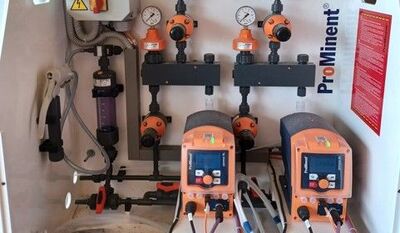
In a total of 120 raw water test stations distributed across the region, metering pumps, sensors and measurement and control technology are digitally networked. The recorded process data is transmitted in real time and monitored centrally. This gives operators a constant overview of metering outputs, measured values and system statuses, even at hard-to-reach locations.
The digital approach improves both operational reliability and efficiency. Processes can be adapted more quickly to changing conditions. At the same time, compliance with regulatory requirements is made easier. Measurement data and operational statuses are centrally available for internal analysis and regulatory reporting.
Practical example of remote monitoring: up to 60 minutes’ time saved per operation
A concrete example illustrates what digital remote monitoring means in practice: SUEZ Water Technologies & Solutions France uses a cloud-based solution with app control for the operation of evaporative cooling systems. Due to Legionella protection requirements, these systems may only be entered whilst wearing protective equipment. The previous service process was correspondingly time-consuming.
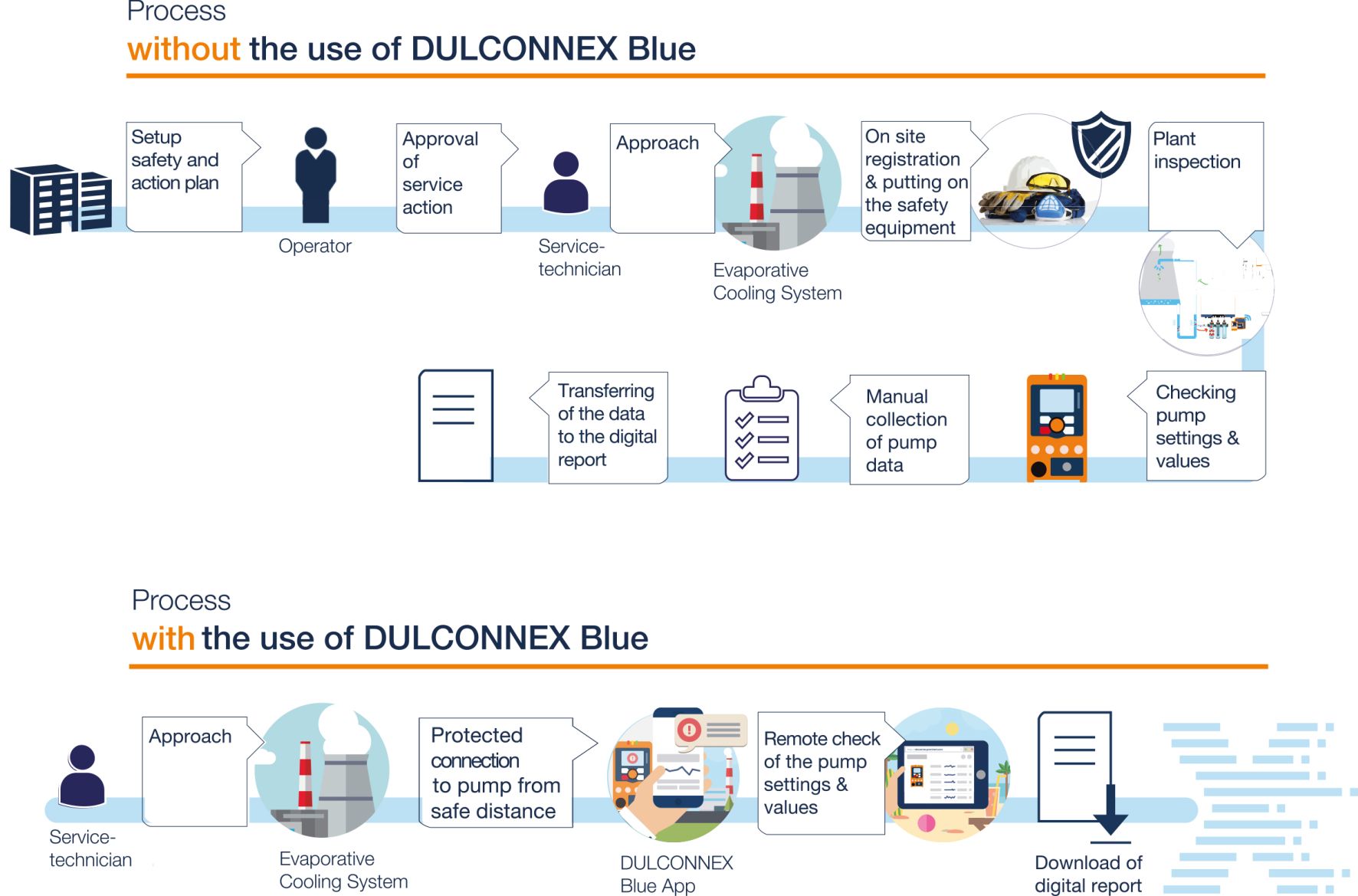
The result: up to 60 minutes’ time saved per call-out and a measurably higher level of occupational safety for service technicians. This model applies directly to water treatment plants: chlorination stations, pumping stations or metering points in hard-to reach areas can be monitored remotely using the same principles.
Digital solutions in wastewater treatment
Digital systems are also gaining in importance in wastewater treatment. Processes such as chemical precipitation, flocculation or pH correction require precise metering in the face of highly fluctuating inflow volumes and loads. Continuous measurement and automated process control allow chemicals and energy to be used more efficiently. Open interfaces enable integration into existing control systems such as SCADA, allowing operators to monitor multiple sites centrally and detect limit violations at an early stage.
Sensors and control technology as a data foundation
Measurement forms the basis of digital water treatment. Modern sensor technology continuously and reliably records relevant parameters such as pH, turbidity, disinfectant residuals or conductivity. In potable water treatment, turbidity often serves as an early indicator of process changes.
If these measured values are processed directly in intelligent measurement and control devices, metering processes can be adjusted automatically. The control loop reacts continuously to changes in water quality, rather than being corrected manually with a time delay.
Digital systems also support the contextualisation of measurement data. Measurement data is not viewed in isolation, but evaluated in conjunction with flow rate, metering capacity and other process parameters.
Added value through central platforms
Cloud-based platforms play a key role in digital water treatment. They enable the secure collection, storage and analysis of large volumes of data. Operators retain control over their data, while access rights are clearly defined.
Another significant advantage lies in scalability. Additional measuring points or plant components can be integrated without fundamentally altering existing systems. At the same time, central platforms enable cross-site comparisons and support predictive maintenance through condition-based analysis.
Operators benefit when hardware and platform are coordinated: commissioning and data communication then run smoothly without interface issues. It is crucial that the platform remains open enough to integrate components from other manufacturers.
Conclusion and outlook
Digital water treatment means more than simply networking individual components. Only the intelligent use of real-time data creates stable processes, increases operational reliability and enables more cost-effective plant management. Against the backdrop of increasing regulatory requirements, digital documentation will continue to grow in importance.
Discussions at IFAT clearly show that digital solutions are now an integral part of modern water treatment. What matters is practical implementation as a tool for safe and efficient operation.
For detailed information on digital water treatment and its integration into existing control concepts, speak to ProMinent experts at IFAT 2026: Hall A3, Stand 451 and Hall C1, Stand 316.
SEW projects to deliver six billion litres of recycled water annually
South East Water has invested in three major recycled water projects to boost water security and...
Smart stormwater system removes harmful pollutants
The technology consistently removed more pollution than conventional systems, increasing removal...
From compliance to circularity: three ways pharma manufacturers can rethink resource management
Effective water management within manufacturing processes can serve as a strategic lever to...