Sustainable wastewater treatment achieved for urban areas
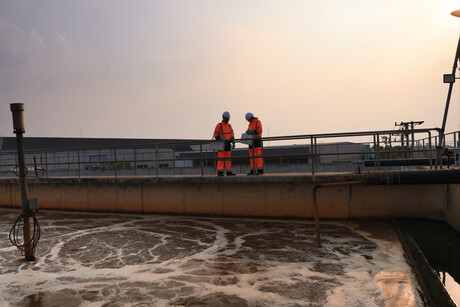
Conventional centralised wastewater treatment plants (WWTPs) can find it difficult to meet sustainability goals as they grow, particularly in high-density environments.
To address these issues, scaled decentralised systems (SDSs) provide an alternative by integrating distributed treatment facilities into existing sewer networks, reducing transport distances and enabling localised resource recovery. However, their performance across plant scales and core technologies remains underexplored in real-world dense urban settings.
A study, published in Environmental Science and Ecotechnology, presented a comprehensive life-cycle assessment of SDSs for wastewater treatment in a high-density city in China.
The research, conducted by the State Key Laboratory of Urban Water Resource and Environment and the School of Environment at Harbin Institute of Technology, evaluated the environmental and cost performance of 29 scenarios (27 SDS scenarios plus two centralised benchmarks), comparing SDS configurations with conventional centralised systems.
The study examined three SDS scales (SDS5, SDS10 and SDS20), focusing on technologies like membrane bioreactors (MBR), constructed wetlands (CW) and moving-bed biofilm reactors (MBBR).
The results revealed that SDSs significantly reduce global warming potential (GWP) compared with centralised systems. These gains were driven by shorter conveyance distances that preserve influent carbon for denitrification and reduce pumping demand, together with the lower electricity consumption of MBBR-based treatment and additional benefits from localised resource recovery.
After screening the 27 SDS scenarios with single recovery, a combined water reuse and heat pump strategy was evaluated for the most promising SDS design, delivering up to a 52.5% reduction in GWP.
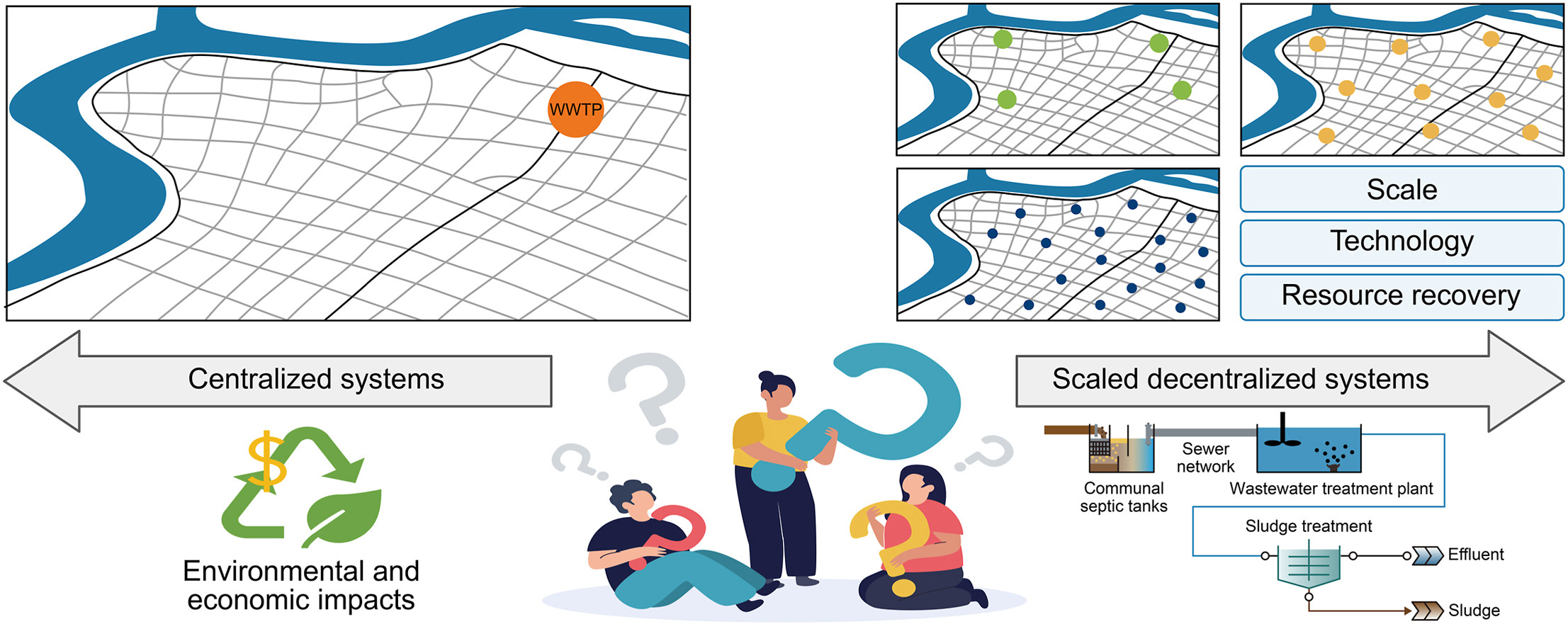
Despite the environmental benefits, the study also highlighted a critical trade-off: communal septic tanks, prevalent in high-density urban areas, still contributed 24–47% of total GWP. This underscores the importance of considering existing infrastructures in the design of SDSs.
The findings indicate that carefully designed SDSs, paired with robust biofilm technology and integrated resource recovery, provide a sustainable pathway for wastewater management in dense cities.
Dr Xiuheng Wang, a leading researcher in urban water resource management, said, “Our findings suggest that the key is not simply ‘centralised versus decentralised’, but carefully scaled decentralisation — integrating treatment and local resource recovery, while accounting for upstream methane hotspots embedded in existing infrastructure.”
The findings of this research provide a roadmap for cities seeking to reduce their environmental footprint and improve wastewater treatment efficiency.
Environmental site restoration to transform sewage treatment plant
The site will become a climate-resilient wetland and swamp forest habitat for critically...
Antibiotics in wastewater may contribute to antimicrobial resistance
Treatment plants can act as hidden reservoirs of bioactivity, says new research, with both...
Smith & Loveless acquires CST Wastewater Solutions
The two wastewater technology companies have worked in partnership on projects throughout...