Specsavers partnership tackles optical waste
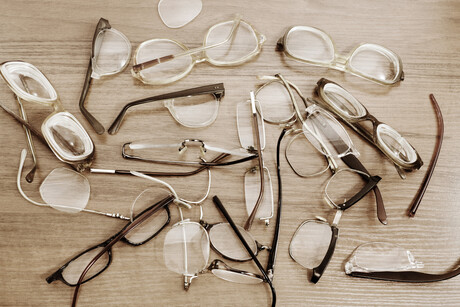
Four in five (78%) Aussies are unknowingly ‘gloarding’, according to new research, with 32.3 million pairs of old prescription glasses and 6.8 million empty contact lens blister packs currently stored in Australian homes.
When laid end to end, this volume would stretch from Perth to Brisbane, posing a significant environmental challenge.
To combat this growing optical waste, Specsavers has partnered with Opticycle to introduce an end-to-end recycling solution across Australia, helping Aussies declutter their homes and protecting the planet by diverting hard-to-recycle optical waste from landfill.
The recycling program specifically targets traditionally hard-to-recycle items, including old prescription glasses, sunglasses, contact lens blister packs and manufacturing waste.
Opticycle ensures that the collected optical waste is processed locally within Australia, providing full traceability and transparency on its journey to be repurposed into new materials.
“Many of us hold onto old glasses — often as a ‘backup pair’ or simply because we don’t know what to do with them. This ‘gloarding’ behaviour can weigh us down,” said professional organiser Kristina Duke. “Specsavers’ new recycling program provides a perfect opportunity for a home reset, allowing you to declutter your space and mind, knowing your old clutter is being responsibly transformed into new resources.”
Specsavers’ research showed nearly half of Australians (46%) said they were unaware that old glasses can be recycled, and six in 10 Australians (61%) are unaware that empty contact lens blister packs can be recycled.
“This initiative is a cornerstone of Specsavers’ broader commitment to positive social and environmental impact. By making it easy to recycle old eyewear, we’re helping people declutter their homes while protecting our planet. It’s a win-win for the environment and for personal peace of mind,” said Cathy Rennie Matos, Specsavers ANZ Head of Sustainability.
The program was rolled out to all stores in April this year and has since recycled 29.7 tonnes of optical waste.
Smart bin receives 2026 Australian Good Design Award
Rather than functioning as a conventional waste bin, it works as an IoT-enabled return point...
AI solar smart bins to end Vic fixed-route rubbish runs
Installation of the smart bins will be completed by the end of November, with 500 bins to be...
Qld Govt backs new resource recovery event
The event is gaining momentum among leading industry associations committed to advancing resource...