Australians need to take care when recycling
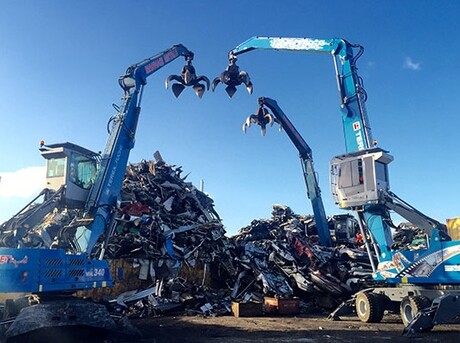
New insights have revealed that one simple mistake at home can send entire loads of recyclable material straight to landfill.
Maddy Gupta, founder and CEO of Manhari Recycling, said while most Australians believe they are doing the right thing, many don’t actually understand what happens once their recycling leaves the kerb.
“People feel good putting items in the recycling bin, but the reality is far more complex,” Gupta said. “What happens next determines whether those materials are reborn as new products or wasted entirely.”
Once recycling is picked up, it is transported to a materials recovery facility, where a sorting process begins.
“At these facilities, everything is separated using a combination of machines, magnets, sensors and airflow systems,” Gupta said. “Paper and cardboard are separated first, followed by plastics, glass and metals like aluminium.”
From there, materials are compressed into large bales and sent to specialist recycling facilities where they are processed into raw materials ready to be reused.
“In the best-case scenario, those materials can be turned into new products within weeks,” he said. “However, that only happens if they are clean, correctly sorted and uncontaminated.”
Gupta said the biggest issue facing Australia’s recycling system is contamination, when the wrong items are placed in recycling bins.
“One wrong item can contaminate an entire load,” he said. “If that happens, the whole batch may be rejected and sent to landfill. That means all the effort people made to recycle is lost.”
Common contamination issues include food waste, soft plastics, liquids and non-recyclable items.
“People often assume that if something looks recyclable, it is,” Gupta said. “However, that’s not always true.”
Gupta said there are several materials that are easily recyclable when disposed of correctly.
“Aluminium cans are one of the best examples,” he said. “They can be recycled again and again without losing quality and are highly valuable in the recycling market.”
Glass bottles and jars, clean cardboard and certain rigid plastics can also be effectively recycled when properly sorted.
“The key is making sure items are empty, clean and placed loosely in the bin, not inside bags,” he said.
Gupta said confusion around what not to recycle is one of the biggest contributors to system breakdown.
“There are some items that should never go in your recycling bin, no matter how recyclable they may seem,” he said.
These include soft plastics such as plastic bags and food wrappers, which can jam sorting machines, as well as food waste, which contaminates other materials.
“Items like greasy pizza boxes, nappies, textiles, polystyrene and broken glass should also stay out of recycling bins,” he said.
“Even things like coffee cups are often not recyclable through standard kerbside systems because they contain mixed materials.”
He said when in doubt, it is better to leave an item out than risk contaminating an entire load.
“Recycling is not just about what happens in facilities. It starts in your kitchen, your office and your daily habits,” he said.
“Every item you place in the right bin has the potential to be reused. Every mistake has the potential to undo that.”
Gupta said small changes in behaviour can have a massive cumulative impact.
“If every household improved how they recycle, we could dramatically increase recovery rates and reduce waste across the country,” he said. “When materials are recycled properly, they don’t just disappear. They are transformed into new products, reducing the need for raw materials and lowering environmental impact.
“That is the foundation of a circular economy.”
AI solar smart bins to end Vic fixed-route rubbish runs
Installation of the smart bins will be completed by the end of November, with 500 bins to be...
Qld Govt backs new resource recovery event
The event is gaining momentum among leading industry associations committed to advancing resource...
Weekly FOGO service for Sutherland Shire
The FOGO rollout will commence with single-dwelling households, with future expansion planned for...