WtE in Australia: beyond the myth of 'burning rubbish'
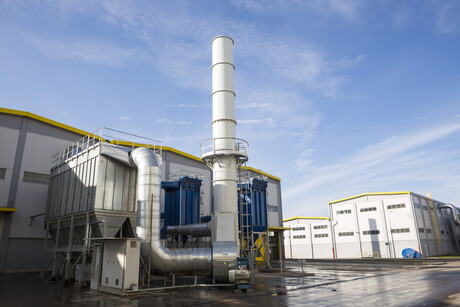
Australia’s energy transition and waste challenge are converging. As landfills reach capacity, emissions targets tighten and electricity systems seek firm, dispatchable power, waste‑to‑energy (WtE) is increasingly part of the conversation. Yet despite decades of safe operation overseas, WtE in Australia is often reduced to a misleading slogan: ‘burning rubbish’.
A vocal minority is actively campaigning against WtE, frequently drawing on outdated examples and selective claims rather than the modern evidence base. The result is that communities can be pushed towards the false choice of ‘incineration vs the environment’, when the real comparison is usually WtE versus continued landfilling of residual waste.
WtE sits after avoidance, reuse and recycling in the waste hierarchy. It is designed to treat residual waste — material that remains once recyclables have been removed — and recover value as electricity and/or heat. It should never be positioned as a competitor to recycling; it is a back‑end solution for what cannot practically be recycled and a way to deal responsibly with what’s left over. If you want a serious landfill‑diversion strategy, you need a credible solution for residuals — and you need to evaluate it on today’s science, not yesterday’s images.
Why does that matter? Because landfill is not benign. Landfills produce pollution streams including leachate and landfill gas, and these pollutants can degrade surrounding surface water bodies, groundwater, soil and air if not properly managed. Methane from decomposing organic waste is a particular concern. Regulators emphasise that when organic waste decomposes in landfill it releases methane, a potent greenhouse gas, and that landfill methane makes a material contribution to emissions inventories.
This is where WtE changes the equation. By diverting residual waste away from landfill, WtE avoids the methane that would otherwise be generated through anaerobic decomposition. Put simply, it removes a key driver of long‑term landfill emissions. That does not make WtE ‘zero impact’ — no infrastructure is — but it means the comparison must include the avoided landfill burden, not just the stack.
So what about air emissions? Modern facilities are engineered and regulated to operate within stringent, health‑protective limits, using multi‑stage flue gas cleaning (filters, scrubbers and other systems) and continuous emissions monitoring. The point is not to dismiss concerns, but to address them with transparent data, conservative design and independent oversight.
International experience is instructive. Germany has effectively eliminated municipal waste landfilling at scale, relying on high recycling alongside thermal treatment capacity; Switzerland has long treated residual waste through well‑regulated plants that also recover energy; and the UK has used energy‑from‑waste within a wider framework while progressively reducing biodegradable municipal waste sent to landfill. These countries show that WtE can sit inside strong environmental regulation and coexist with high recycling, when capacity is sized to residuals and policy keeps the hierarchy intact.
Australia does not need to copy these systems wholesale. But the principles transfer well: keep recycling first, size facilities to residuals, regulate tightly, disclose performance, and engage early and honestly. Crucially, public debate should reflect what the technology is today. When campaigns present WtE as uncontrolled incineration, they risk steering communities back towards the very outcome most of us agree is worst: continued landfill dependence, with methane emissions and long‑term environmental liabilities.
Waste‑to‑energy is not a silver bullet for Australia’s waste or energy challenges. It is, however, a practical tool for managing residual waste while contributing reliable, local energy. The task now is to have an evidence‑based conversation — and to judge options against the real alternative. When the choice is WtE or more landfill, the environmental comparison looks very different.
To move forward, Australia needs to treat WtE like any other regulated industrial asset: define clear performance standards, publish emissions and operating data in plain language and require independent auditing. Communities should expect rigorous approvals, conservative dispersion modelling and enforceable conditions, not vague promises. Equally, policymakers should be honest about trade‑offs: if residual waste is not treated, it is landfilled, with methane generation and long‑term leachate management obligations that do not disappear when the gate closes.
The most constructive debate is therefore comparative. Ask: which option delivers lower lifecycle emissions, lower local impacts, and higher accountability over decades?
If we keep recycling at the front end and hold WtE plants to strict transparency at the back end, Australia can reduce landfill reliance without compromising health or environmental standards. And that is where the evidence points.
Can wastewater algae be used in manufacturing?
A UNSW project with Sydney Water and Pacific Bio is exploring whether algae that has already...
Conveyor belt recycling initiative for Gladstone Ports Corporation
End-of-life conveyor belts are diverted from landfill through the initiative, transported for...
New method recycles mixed plastic packaging sans chemicals
The method selectively breaks down one type of plastic in mixed plastic packaging while leaving...