New method to extract microplastics from soil: study
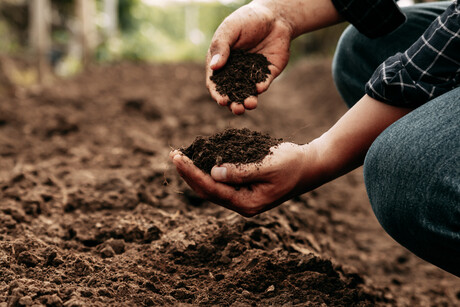
A ‘gold standard’ for soil analysis and microplastic extraction has been developed at the University of New England (UNE), providing the capabilities to safeguard agricultural soils and protect human health.
Led by PhD candidate Nivetha Sivarajah, the research team developed a new multi-criteria framework to identify the most effective method to extract six common plastic types from different soil textures.
Integrating factors such as recovery, spectral integrity, extraction time, cost and environmental impact, the method identified is affordable and accessible, enabling adoption by scientists globally.
“We don’t currently have a standard method for this, so once this process has been adopted, it can be used to better understand the true extent of microplastics pollution in agricultural soil,” Sivarajah said.
Agricultural soils are extensively contaminated by plastics from mulching films, biosolids, sewage sludge, shade nets and waste that degrade over time to form microplastics.
This poses a threat to food security, soil health and crop yields — and risks the contamination of groundwater.
“This has significant environmental impact and can transfer through the food chain and threaten human health,” Sivarajah said.
Sivarajah’s optimised extraction method uses a sequence of organic matter digestion followed by density separation, achieving a recovery of more than 92%.
The process is fast, low-cost at roughly AU$5.47 per sample, and uses reagents with a low environmental impact.
“It was important to consider cost in our method, as the cheaper it is, the more likely it will be adopted, which is an especially important consideration in low socioeconomic regions of the world,” Sivarajah said.
While this study provides the foundation for scientists to develop global standards, Sivarajah is already looking to the next phase of her research.
She is currently applying her method to soil samples collected in Sri Lanka to study the abundance of microplastics in Sri Lankan paddy fields. Sivarajah will also study how microplastics migrate through different soil layers, particularly in areas using municipal solid waste compost.
“I am excited to continue working in the UNE Pollution Science Research Group and to put this method to the test in the real world and contribute to groundbreaking research that is protecting human health, food security and the planet,” she said.
Sivarajah’s work appears in the June edition of Soil Advances journal.
Recycled Content Verification tool by GECA and Rebuilt
The tool provides an accessible pathway for organisations to substantiate recycled content claims...
Emerson Rosemount QX1000 continuous gas analyser
Emerson has released its Rosemount QX1000 continuous gas analyser, suitable for use in continuous...
QED Huberg SEM5000 portable methane detector
The Huberg SEM5000 is a field-proven portable methane detector for landfill surface...