Thermoelectrics a hot topic at Energy Harvesting & Storage 2014
IDTechEx’s sixth annual Energy Harvesting & Storage event will be held from 1-2 April in Berlin. The event will provide insight into energy harvesting technologies, case studies and markets, ranging from consumer electronics and sensors all the way to vehicles, building and industrial automation.
IDTechEx expects thermoelectric generators will be commercialised in vehicles after 2020, but the development work is already taking place. Porsche’s 919 hybrid racer uses a 500 HP 2 L V4 engine and an electric kinetic energy recovery system (KERS) with an electric motor active on the front wheels. The KERS is in part charged up with energy generated via recovery of heat from the exhaust flow.

Furthermore, thermoelectric generators are already being proliferated for industrial automation condition monitoring, with companies like ABB and Logimesh having showcased temperature sensors powered by thermoelectrics. KELK in Japan has launched a thermoelectric generation system by using waste heat in steel mills, aiming for maximum power output of 10 kW. Similar projects are being funded worldwide, with GMZ Energy, O-Flexx and other thermoelectrics companies working on utilising heat in industrial facilities where thermal energy is wasted in high-energy processing such as steel production and casting.
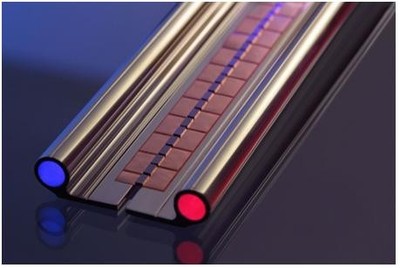
Academic speakers will also be discussing their developments, with Professor Douglas Paul presenting the University of Glasgow’s work on SiGe microfabricated thermoelectric materials and their application in devices and generators. The use of micro-structures such as SiGe superlattices can lead to enhanced ZT and power factors over bulk materials.
For more information on Energy Harvesting & Storage 2014, visit www.energyharvestingeurope.com.
UNSW HTH achieves highest sustainability rating
The 35,600-square-metre facility was developed to accelerate the translation of research and...
Fremantle Seaweed acquires onshore seaweed technology
The seaweed producer hopes to accelerate a path to commercial production by adding onshore...
Boral launches detailed carbon reporting capability
The company said the automated reporting capability eliminates the need to manually compile...