Industrial applications for safflower oil
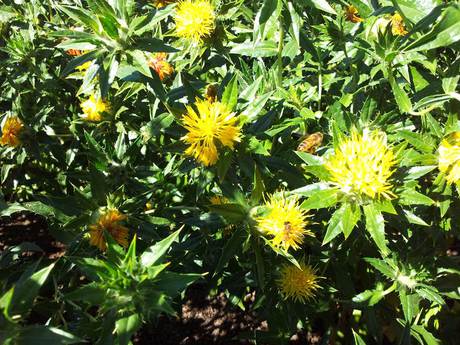
Clean technology company GO Resources has licensed CSIRO to commercialise its technology for the production of super-high oleic safflower oil (SHOSO) — a plant-sourced alternative to petroleum-based raw materials and traditional sources of oleic acid (an industrially significant fatty acid).
As part of the agreement, GO Resources will give Australian farmers access to safflower that produce very high levels of oleic acid (>92%) in the oil extracted from the seed. At the same time, there is a reduction in the levels of less desirable saturated and polyunsaturated fats. This level of oleic acid is said to be the highest of any commercially available plant-derived oil worldwide.
“The oil combines purity with stability and biodegradability,” said GO Resources Director Michael Kleinig. “Safflower is a hardy and adaptable crop; [it] works well in rotational cropping and produces good yields under dry conditions.”

The technology to produce the oil was developed at CSIRO through the Crop Biofactories Initiative, a joint activity of CSIRO and the Grains Research and Development Corporation (GRDC). Dr Allan Green, a research director at CSIRO’s Bioproducts Program, said, “We have proven that we can tailor safflower to produce extremely high levels of oleic acid in the seeds. This technology is a great example of how plant oils are uniquely suited for expanded use as industrial raw materials and substitutes for current petrochemicals.”
SHOSO is expected to have direct applications as a raw material for bio-based feedstock, with industrial applications including lubricants, solvents, cosmetics, plastic additives, resins and polymers, biofuels, coatings, paints and inks. GO Resources expects commercial production to begin in 2018 and seeks to expand Australian and international opportunities over time.
“The SHOSO technology is another key step in developing new feedstocks for sustainable industries of the future,” added fellow GO Resources Director Trevor Gawne. “We are delighted to have been entrusted by CSIRO to commercialise its technology and look forward to taking the next steps in applying the technology to a new generation of crop-based products.”
Tomago Aluminium smelter gets green investment
The joint government investment will deliver a long-term renewable energy solution for the...
Stantec acquires Sydney-based consultancy
The acquisition grows Stantec's environmental services team in Australia to nearly 450...
NSW EPA CEO takes on federal role
CEO Tony Chappel will depart the state's independent regulator in September to take up a new...