Conspiracy mentality drives misinformation about EVs
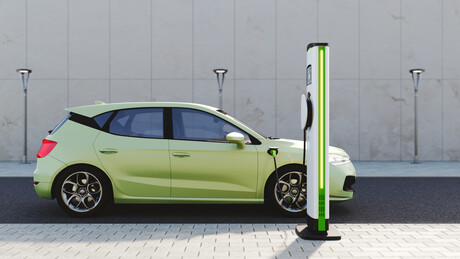
A University of Queensland-led study has found misinformation about electric vehicles (EVs) has taken root, primarily fuelled by mistrust and conspiracy theories.
Dr Chris Bretter from the UQ Business School said surveys in Australia, the US, Germany and Austria found people were more likely to agree than disagree with misinformation on EVs — even among those who owned one.
“The misinformation statements we tested included that EVs are more likely to catch fire than petrol cars, do not produce emission savings and emit electromagnetic fields that damage health ... all claims which are demonstrably false,” Bretter said. “We know this sort of false information is out there and circulating, but the scale of acceptance is concerning and poses a significant challenge to the global transition to more sustainable transport.
“The fact that even EV owners were more likely than not to agree with misinformation underscores just how embedded it’s become in society.”
Professor Matthew Hornsey said education played no role in whether survey respondents agreed with false information about EVs.
“The biggest predictor of whether a person accepted misinformation statements was actually conspiracy mentality — a tendency to believe conspiracies occur and seeing the world through a lens of corruption and secret agendas,” Hornsey said. “This same outlook has also been associated with opposition to science-backed technologies like vaccinations and wind farms.”
Hornsey said survey respondents had concerns about secret agendas to exaggerate the benefits of EVs, unethical profit-driven decisions, and unfounded or exaggerated concerns about the damage of EVs towards health and the environment.
“The results show public understanding of EVs has been distorted by an information landscape shaped by myths, selective framing and speculative reasoning,” he said.
The researchers also tested strategies to reduce belief in EV misinformation, and increase support for pro-EV policy and an intention to purchase an EV.
“We provided survey respondents with a traditional fact sheet on EVs as well as a dialogue with ChatGPT,” Bretter said. “Encouragingly, both strategies resulted in lower endorsement of EV misinformation, even 10 days on.
“This is the first evidence that non-curated conversations with generative AI can have positive effects on misinformation, showing its promise for possible future solution-focused interventions on a large scale.”
Bretter said the potential for AI to help combat climate change needs to be assessed against the technology’s own environmental impacts.
“Given the global need to transition toward more sustainable transport options, it is crucial we address the prevalence of misinformation about energy efficient technologies like EVs.”
The project also involved researchers from the Leibniz Institute for Psychology and the University of Hohenheim in Germany. The research paper was published in Nature Energy.
Epson MD serves meals for CEO CookOff
The OzHarvest CEO CookOff will bring together business leaders, chefs and corporate teams to...
World record set for large-scale perovskite PV efficiency
UNSW has collaborated with a high-tech energy company to set a benchmark for 676 cm2...
Australia now more at risk from climate pollution
Australians remain dangerously exposed and ill-prepared for the risks outlined in the 2025...