'Brownfielding' increases to meet metal demand
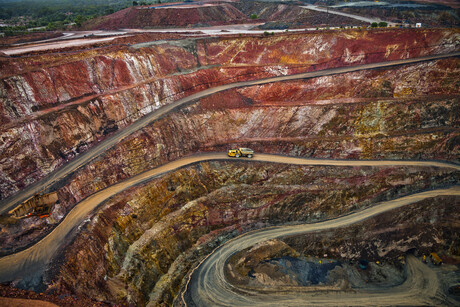
University of Queensland researchers have revealed capital expenditure at existing mine sites is expanding at a rate not seen before amid rising demand for metals for renewable energy projects, transport infrastructure, digital devices and data centres.
Professor Deanna Kemp from UQ’s Sustainable Minerals Institute said data highlighted an urgent need for policymakers to consider the long-term implications of relying more heavily on ‘brownfielding’ and what regulations may be needed if we are operating larger mines for longer.
“Complexities around new mine projects has fuelled the brownfield expansion trend, with miners often finding it a more viable option to keep supply flowing,” Kemp said. “Mine expansion is not a new phenomenon but the scale and rate we are seeing now certainly is, and it is solidifying as a structural feature of the global economy.
“This trend has social and environmental implications, and I don’t think we’ve truly considered them.”
The analysis of 20 years of data on mining activity and capital investment revealed expansions at 366 brownfield mines in 57 countries, indicating major companies were focusing less on greenfield sites to address supply shortfalls.
Researchers at SMI’s Centre for Social Responsibility in Mining said the deepening trend of expanding existing mine projects was taking place amid the accepted sustainability risks of ongoing expansion as well as deferred and more complex mine closure.
“Digging deeper is often coupled with a decline in the grade of the metal deposits,” Kemp said. “Larger pits or deeper underground workings also result in greater volumes of mine waste.
“This often extends environmental impacts beyond the original project footprint, while surrounding populations may also experience incremental disruption and displacement.”
Researchers said projections show the supply of metals such as copper, cobalt, graphite, iron ore, lithium, nickel and zinc will need to lift sharply to support the global rollout of decarbonisation technologies.
Kemp said it was unlikely this supply would come from new, large-scale mining projects with ongoing concerns from conservationists, local communities and people connected to the land.
“Simply put, it is very hard to get a new mine up and running,” Kemp said.
Kemp said established mines typically carried a range of social, environmental and governance issues that experts considered through different lenses. Supply side considerations, for example, are usually the realm of economic geologists, while social and environmental scientists are more focused on examining and establishing potential impacts.
“Our goal with this research is to bring these perspectives together,” Kemp said. “We now see a need for a regulatory framework that is more realistic about the patterns that we’re creating.
“If the global energy and digital transition is going to increasingly be reliant on mine expansion, we need to talk about how governance systems could be better set up for a future where we have larger mines that continue to be extended in different ways.”
Roadmap released for Australia's bamboo industry
Engineered bamboo in Australia could cut greenhouse gas emissions by about 430,000 tonnes by 2035...
Australia now more at risk from climate pollution
Australians remain dangerously exposed and ill-prepared for the risks outlined in the 2025...
Biodiversity Standard launched to improve nature outcomes
The launched Standard was developed under the ENVOMARK Value Nature Framework, which assures...