Closing the policy gap: the case for fibre transparency in Australia's fashion industry
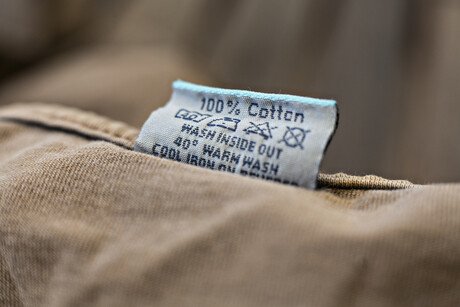
As of 2019, Australia’s last mandatory textile fibre content labelling laws lapsed. Even then, these requirements applied only in New South Wales, with the national fibre labelling standards having already fallen away following the introduction of the Australian Consumer Law in January 2011. Today, only care labels are legally required for clothing and household textiles in Australia, not fibre content.
While many brands continue to voluntarily provide fibre content information, consumers may have noticed a steady decline in specificity. Products are increasingly described as “cotton rich” or “cotton/elastane”, rather than listing the precise material compositions such as 95% cotton and 5% elastane.
This erosion of basic product information represents a step backwards for both transparency and sustainability. The clothing and textiles sector is already flooded with greenwashing. In the Australian Competition and Consumer Commission’s 2023 sweep of environmental claims, textiles, garments and footwear were identified as one of the most problematic sectors. At the same time, clothing and textiles are increasingly entering the wellness space, with products making often unsubstantiated health-related claims such as anti-microbial, anti-odour, wicking, cooling, etc.
There are multiple risks associated with this lack of clarity. First, consumers — already navigating a landscape of greenwashing — are placed at an even greater disadvantage when the most fundamental information about a product’s material composition is missing or vague. For those with clear fibre preferences, such as a desire for natural fibres, it becomes increasingly difficult to make informed purchasing choices. This is further complicated by the fact that many synthetic and semi-synthetic fibres were developed to mimic more expensive natural fibres, such as silk. A silk garment, for instance, is typically significantly more expensive than a visually similar viscose, rayon or polyester alternative. Without clear labelling, it may be nearly impossible for the average consumer to determine whether a product is genuinely silk, or something else.
Second, the absence of accurate fibre composition data poses a significant barrier to Australia’s transition to a circular clothing economy by 2030. With Seamless — Australia’s first clothing product stewardship scheme — launching in June 2024, national attention is turning to reuse, recycling and end-of-life solutions. However, many of these systems rely on precise knowledge of fibre composition, and garments that are 100% of a single, natural fibre such as cotton, wool or silk have the most potential and highest value for re-use and recycling.
Recycling options for blended fibres remain especially limited, with most destined for mechanical recycling (eg, downcycled into shredded fibres for filling or non-woven mats). Those that do exist — such as BlockTexx’s chemical separation technology — are typically restricted to specific blends, most commonly cotton/polyester. And there are currently no viable recycling technologies for elastane, meaning that all garments containing elastane (spandex) are effectively destined for landfill or waste-to-energy processes.
Although technologies such as near-infrared (NIR) spectroscopy can be used to identify and sort textiles, they are not yet widely implemented in Australia. As a result, most sorting still relies on manual processes, with workers dependent on the information provided on fibre content labels — if it is available at all.
Meanwhile, the European Union is moving decisively in the opposite direction, introducing more comprehensive product information requirements through initiatives such as the Digital Product Passport and the Ecodesign for Sustainable Products Regulation (ESPR), due to commence in 2027. In comparison, Australia appears significantly behind, lacking even the most basic fibre composition requirements.
It is time for Australia to follow suit by requiring more information — not less — on clothing and textile products. Both food and cosmetics are subject to ingredient labelling requirements, with contents listed in descending order by volume or mass. This reflects their direct interaction with the body: food is ingested, and cosmetics are applied to the skin. Yet clothing and household textiles — worn daily and in constant contact with our bodies — are not held to the same standard.
If food and cosmetics must disclose every ingredient, why shouldn’t clothing and textiles? And how might our purchasing decisions change if we knew whether a fabric was derived from fossil fuels, old-growth forests, or involved the use of restricted or potentially harmful chemicals?
Study assesses recycled content use in home builds
Using a completed dwelling, the study explored how the percentage of recycled content use can be...
Beyond compliance: why ESG in construction is becoming a people issue
The shift comes as the industry faces significant workforce pressures, with skilled labour...
Nature is the blueprint for better cities
Consideration of the natural environment can no longer be treated as an optional design feature...