Solar cell efficiency breakthrough
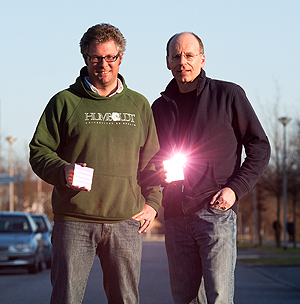
The early-stage breakthrough of a University of Sydney researcher and his German collaborators could see the realisation of 40% efficiency for low-cost solar cells suitable for rooftop panels.
With Australian Solar Institute support, Associate Professor Tim Schmidt from the University’s School of Chemistry, together with the Helmholtz Centre Berlin for Materials and Energy, has developed a ‘turbo for solar cells’, called photochemical upconversion that allows energy, normally lost in solar cells, to be turned into electricity.
The finding has been published in the Energy & Environmental Science journal.
Associate Professor Tim Schmidt said using the upconversion technique, a process which harvests the part of the solar spectrum currently unused by solar cells, eliminates the need for costly redevelopment of solar cells.
“We are able to boost efficiency by forcing two energy-poor red photons in the cell to join and make one energy-rich yellow photon that can capture light, which is then turned into electricity,” Associate Professor Schmidt said.
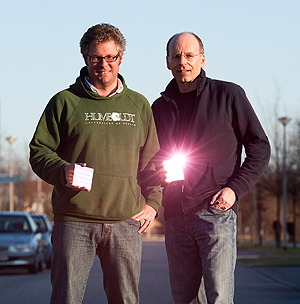
“We now have a benchmark for the performance of an upconverting solar cell. We need to improve this several times, but the pathway is now clear.”
The Australian Solar Institute is a $150 million commitment by the Australian Government to support the development of photovoltaic and concentrating solar power technologies in Australia.
ACCC guidance on emissions claims to consumers released
The guidance aims to assist businesses in making accurate, credible emissions claims and to...
Industry transitions from gas to renewable heat: report
More than 230 Australian industrial sites and commercial buildings will have switched from gas to...
Industrial electricity costs could halve by sharing infrastructure
Heavy industry could reduce electricity costs by up to 50% by sharing renewable infrastructure...