Number 2 is the latest in poo-powered vehicles
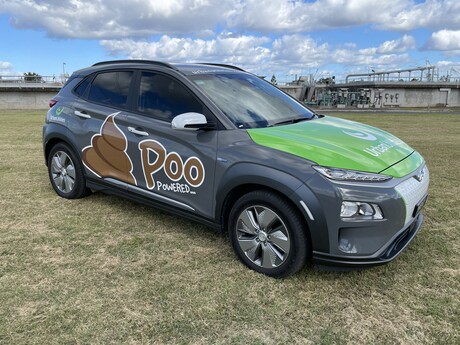
A poo-powered SUV has been launched by Urban Utilities, in an expansion of its fleet of cars fuelled by electricity generated by human waste.
Aptly named ‘Number 2’, the new SUV — a Hyundai Kona Electric — is the second vehicle to join the line-up of Urban Utilities’ poo-powered cars.
Urban Utilities spokesperson Anna Hartley said the car was the new ‘skid’ on the block.
“Number 2 is not your average SUV — it’s an S-Poo-V, with a giant poo emoji emblazoned on the side so there’s no guessing what’s powering it,” she said.
“On average, one person’s daily habits can generate enough electricity to make the car travel around 450 metres.”

“They might not realise it, but more than 330,000 people in Brisbane’s south and west are helping to create fuel for our poo-powered cars every time they flush,” she said.
Hartley said turning poo into power was also saving Urban Utilities around $1.7 million a year in operating costs.
“Last financial year we produced enough electricity to power the equivalent of nearly 4000 homes for an entire year,” she said.
“Poo power doesn’t only help keep our cars on the road, it also helps us run our two largest wastewater treatment plants at Oxley and Luggage Point. By harnessing the power of poo, we’re reducing our operating costs and helping the environment by using a more sustainable energy source, so it’s a win-win.”
Number 2 will hit the road alongside Australia’s first poo-powered car, which Urban Utilities launched in 2017.
“Look out for our team driving around town — if the car’s eye-catching design doesn’t give it away, the ‘Number 2’ registration plates sure will,” Hartley said.
“Those who want an up-close-and-personal look at our poo fleet can view the cars at the upcoming Green Heart Fair sustainability festival in Chermside on May 30.”
‘Number 2’ fast facts:
- Australia’s first poo-powered electric SUV
- 150,000 litres of sewage powers a full charge of the car — for free!
- Petrol savings of around $1700 per year*
- Can be charged at a 240 V power point
- Driving range of up to 450 km
- Produces zero emissions
*Based on around 15,000 km/year at a fuel price of $1.50/L
ACCC guidance on emissions claims to consumers released
The guidance aims to assist businesses in making accurate, credible emissions claims and to...
Industry transitions from gas to renewable heat: report
More than 230 Australian industrial sites and commercial buildings will have switched from gas to...
Industrial electricity costs could halve by sharing infrastructure
Heavy industry could reduce electricity costs by up to 50% by sharing renewable infrastructure...