Industry transitions from gas to renewable heat: report
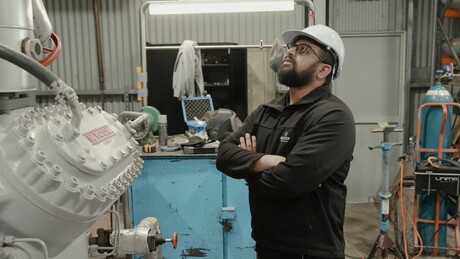
A quiet energy revolution is happening in Australian factories and commercial buildings, with industries transitioning away from gas, according to a new report released 15 October 2026.
The ‘Hot, here, now’ report published by the Australian Alliance for Energy Productivity (A2EP) calculates that the number of major heat pump installations in existing buildings has doubled since 2022, and the pace is poised to accelerate. It estimates that more than 230 major Australian industrial sites and commercial buildings will have switched from gas to large-scale heat pumps by the end of 2027.
“There’s a hidden energy transition happening in Australia — without fanfare but with very real benefits for energy efficiency and security and lowering production costs,” said Jarrod Leak, CEO of A2EP.
Food and beverage case studies
In its report, A2EP provides some food and beverage examples and other companies that have already made the switch, including healthcare company Blackmores Group and red meat processor Hardwick Meats (owned by Kilcoy Global Foods).
When Kilcoy Global Foods installed an industrial heat pump at Hardwick Meatworks, a meat processing site in Kyneton, Victoria, it reportedly found an unexpected benefit from the upgrade: operational stability.
“The first and foremost benefit of the heat pump was it stabilised our operation straight away,” said Mayur Dangar, Head of Compliance at Kilcoy Global Foods.
“Now we have a structured approach to thermal energy rather than just relying on one single source.”

According to the report, the Hardwick Meatworks site had previously relied on a 2 MW gas boiler to heat water used for sterilising, cleaning and washing down equipment. But the heat pumps were reported to be more efficient than gas and can also harness ‘waste heat’ from other parts of the manufacturing process.
Recording the big shift
“We’ve tracked heat pump installations in every state and territory across a range of industry sectors,” Leak said. “This is a big shift that’s largely gone unreported because it’s happening behind factory doors or in the mechanical rooms of major buildings — places the public usually doesn’t see.
“Our study finds that pharmaceutical, food and beverage, commercial laundries, aquatic centres and universities are leading the race to renewable heat. The next sectors that could benefit from making the switch to heat pumps are brewing and malting, hospitals and aged care.”
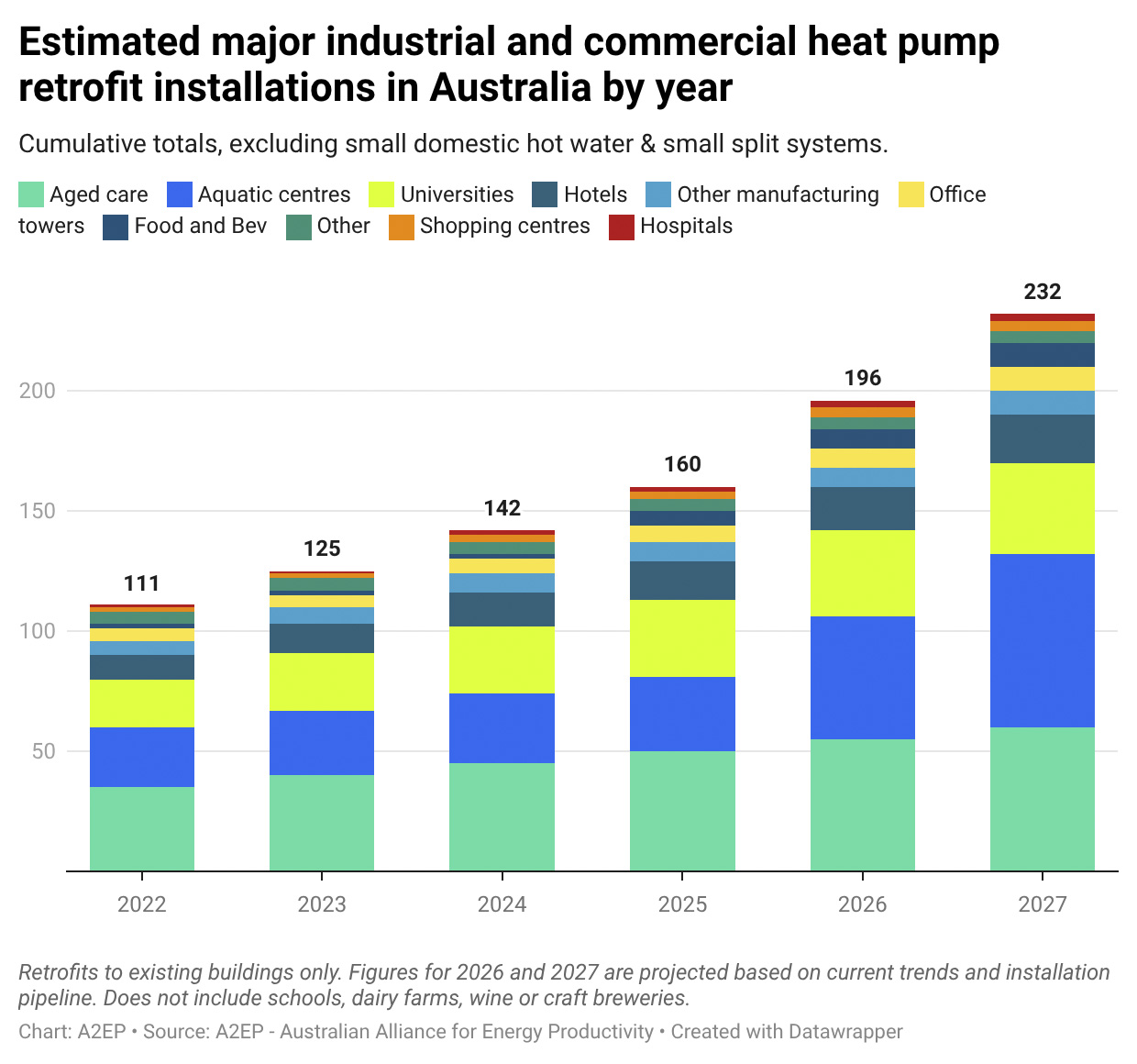
As part of the renewable energy and decarbonisation discussion in Australia, the report predicts an ambitious rollout of heat pump technology could reduce cumulative emissions by 391 million tonnes in industrial processes, and 96 million tonnes in commercial buildings, between 2020 and 2050.
“The transition to industrial and commercial heat pumps has started, but it can be turbo-charged with smart government policy. This is a huge untapped, near-term opportunity to reduce emissions which Australia’s industrial and commercial sectors can’t afford to miss,” Leak said.
For more details, visit www.a2ep.org.au.
Originally published here.
Industrial electricity costs could halve by sharing infrastructure
Heavy industry could reduce electricity costs by up to 50% by sharing renewable infrastructure...
$3m investment in microgrids for Far West communities
The project will scope assets required to generate and store energy locally for NSW communities...
$11m to supply clean energy for social housing tenants
The pilot will install solar panels on social housing properties and connect them through a...