Coal and LNG export demand could dry up before 2040: report
According to new analysis undertaken by Climate Resource for WWF-Australia, demand for Australia’s coal and LNG exports could dry up before 2040.
The analysis looked at what would happen if the country’s trading partners follow through on their energy transition plans and commitments to the Paris Agreement.
It tested what the most ambitious 1.5°C pathways would mean for Australia’s fossil fuel industries, covering both exports and Australia’s own use. On those pathways, the country’s fossil fuel industries would shrink much faster than many assume, falling to about 5% of current levels by 2050.
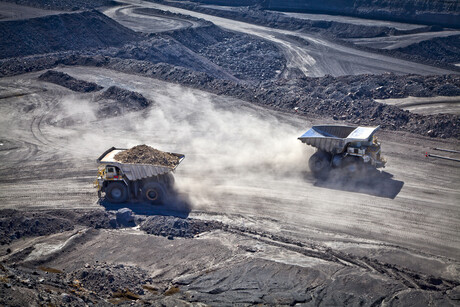
It stated that Australia’s coal exports would drop from around 362 million tonnes in 2024 to around 100 million tonnes in 2035, a decline of almost three-quarters. Demand for coal and LNG exports would be largely gone before 2040.
The analysis suggested thermal coal was found to go first, with its exit years running from 2034 to 2039. Metallurgical coal would follow from 2042 to 2050, gas from 2037 to 2049, and oil from 2050 to 2067.
The report does not predict exactly when Australia’s fossil fuel industries will end. Instead, it highlighted a plausible future in which many of the country’s major trading partners continue accelerating the shift towards renewable energy, electrification, domestic energy security and lower-carbon industries.
“We don’t transition alone. Every solar farm and battery switched on across Asia rewrites Australia’s coal and gas export forecasts,” said Dr Anita Talberg, Decarbonisation Lead at Climate Resource and the lead author of the report.
“Countries are starting to put dates on their transition away from fossil fuels. Australia, one of the world’s biggest fossil fuel exporters and President of Negotiations at COP31, has the evidence it needs to start its own roadmap now.
“Our analysis underlines the need for a planned exit and transition to new industries, built around and with workers, regions and communities.”
The analysis comes as countries gather for COP31 in Türkiye and as the COP30 Presidency of Brazil has published its global roadmap. This roadmap describes the transition away from fossil fuels as urgent, inevitable and achievable, and recommends that countries develop national transition plans.
WWF-Australia is calling on the Australian Government to develop its own national transition roadmap to manage the transition away from fossil fuels.
“Australia must stop treating fossil fuel decline as a distant future problem,” said Rob Law, WWF-Australia’s Senior Manager, Energy Transitions.
“Nobody can say exactly when these exit points for fossil fuels will arrive, but the analysis from Climate Resource shows they are likely to be much sooner than many are predicting. That strengthens the case for planning now.
“Workers, families and regional communities should not be left carrying the risk of an unmanaged transition. Australia is already paying the price of fossil fuel dependence through higher energy bills. That’s why we need to build the industries of the future now, not wait until change is forced upon us.
“Australia needs a clear roadmap for managing fossil fuel decline and building the industries that will underpin future prosperity.
“New industries, infrastructure, supply chains and workforce skills take years to build. If Australia waits until declining demand is obvious to everyone, we will have fewer choices, fewer opportunities and higher costs.
“This decade is our opportunity to build what comes next while we still have time, resources and choices.”
Read the full analysis by Climate Resource for WWF-Australia here.
Aussie solar boom creates million-tonne waste problem: report
As millions of solar panels age, researchers warn the country must act quickly to prevent a...
ACCC guidance on emissions claims to consumers released
The guidance aims to assist businesses in making accurate, credible emissions claims and to...
Industry transitions from gas to renewable heat: report
More than 230 Australian industrial sites and commercial buildings will have switched from gas to...