Canola may be key to Australia's biofuel
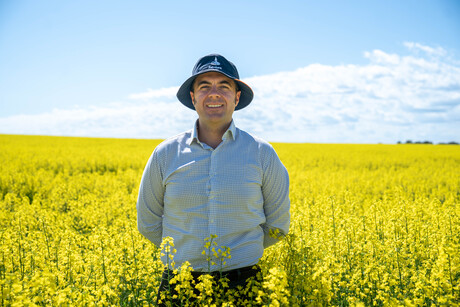
A new report by agribusiness banking specialist Rabobank highlights the key role the nation’s canola could play as a biofuel in future energy transition and security.
The report, ‘Fuelling the future: How the new biofuel demand wave could reshape Australia’s canola sector’, said with the uptake of electric vehicles largely confined to passenger transport and having limited impact on diesel and jet fuel usage, biofuels are increasingly being turned to globally to help reduce emissions in these “harder to abate” sectors.
And with canola oil a key feedstock used in the production of biodiesel, this means the role of Australian canola in energy markets could grow.
The report, by the bank’s RaboResearch division, said the rising demand for renewable diesel and sustainable aviation fuel (SAF) — particularly across the Asia–Pacific region — is opening a “rare strategic window” for Australia to capture greater value from its canola crop.
The report’s lead author, RaboResearch senior grains and oilseeds analyst Vitor Pistoia, said diesel and jet fuel remain central to freight, mining and aviation, and these are key sectors where biofuels are gaining traction as a lower-emissions alternative.
“For Australia, this creates a genuine opportunity to rethink how canola fits into both our agricultural system and our energy system,” he said.
The report said Australia currently exports around six million tonnes of canola seed each year, most of it unprocessed. “Converted into renewable diesel, that volume would equate to more than two billion litres of fuel,” the report said.
“By comparison, Australia imports more than 30 billion litres of diesel annually,” Pistoia said, highlighting what RaboResearch describes as a significant “value-add imbalance”.
“At the moment, we export the raw material and import the finished fuel. That means a large share of the processing margin, jobs and strategic control sits offshore. As biofuel demand rises, that imbalance becomes harder to ignore.”
The report notes that global vegetable oil markets are currently being reshaped by tightening regulations in Europe — aimed at limiting the use of food crops for biofuels — as well as rapidly-expanding biofuel capacity across the Asia–Pacific, where new SAF and renewable diesel plants are under development.
This shift is expected to increase demand for processed vegetable oils, rather than raw oilseed exports, placing greater emphasis on crushing capacity, traceability and consistent supply, Pistoia said.
The report said there are two broad pathways for Australia’s canola industry — expanding domestic crushing and either refining domestically or increasing exports of canola oil to overseas biofuel refineries.
“Local processing could allow Australia to capture more value across the supply chain, while improving utilisation of co-products such as canola meal,” it said.
However, the report cautions that outcomes will depend heavily on policy settings, energy prices, logistics and capital costs.
RaboResearch said canola oil is a strong potential fit for renewable diesel and SAF production, particularly in Asia–Pacific markets close to Australia, such as Japan, Indonesia and India.
“From a technical perspective, canola oil aligns well with the refining pathways being built across Asia–Pacific,” Pistoia said. “Australia’s geographic proximity to these markets also matters, as shorter shipping distances can reduce freight costs and emissions compared with some alternative origins.”
The report said a more diversified demand base for Australian canola — spanning food, feed and energy — could also support longer-term price resilience and influence canola’s role in crop rotations.
“For grain producers, biofuels don’t replace existing markets, but they do add another demand pillar,” Pistoia said. “That diversification can be valuable in managing price risk over the long term, particularly as global energy markets evolve.”
Pistoia said the current oil supply shock created by the Middle East conflict had potential implications for biofuel markets.
“Reduced energy exports from Persian Gulf countries caused by the current conflict have sharpened attention on energy security and the reliance on imported liquid fuels,” he said. “While impacts are still emerging, these types of conditions reinforce policy support for alternative fuels, potentially accelerating biofuel policy implementation and investment in lagging markets such as Australia.
“Some countries have already announced increases in mandates of biofuel blending in fuel, including Thailand, Indonesia, Vietnam, Argentina and the US.”
ACCC guidance on emissions claims to consumers released
The guidance aims to assist businesses in making accurate, credible emissions claims and to...
Industry transitions from gas to renewable heat: report
More than 230 Australian industrial sites and commercial buildings will have switched from gas to...
Industrial electricity costs could halve by sharing infrastructure
Heavy industry could reduce electricity costs by up to 50% by sharing renewable infrastructure...