Ampd launches next-gen battery storage for heavy industries
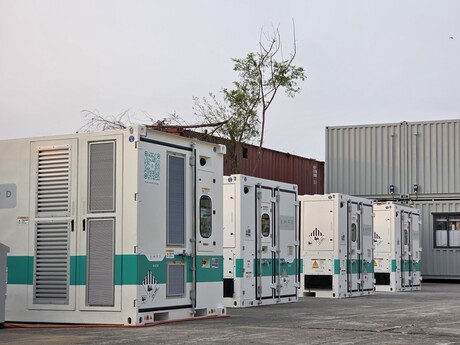
Ampd Energy, a developer of energy storage systems (ESS) for heavy industries, has launched its next generation of ESS.
Following the success of the Ampd Enertainer ESS, the company’s NextGen product range — the Ampd 200 and Ampd 400 — is targeted at heavy industrial sites, such as construction, infrastructure, concrete batching, oil & gas, microtunnelling, ports, mining, and also events.
According to Ampd, the Enertainer has so far eliminated over 160,000 tonnes of CO2 and removed an equivalent of over 120,000 cars’ worth of air pollution (NOx, PM and SO2).
With up to 292 kW/297 kVA (193 kW/214 kVA continuous) and up to 585 kW/595 kVA (386 kW/428 kVA continuous) respectively, the new ESS range builds on the Entertainer, opening up new markets and power applications.
Both the Ampd 200 and Ampd 400 are certified by SGS to the standards of the International Electrotechnical Commission (IEC) and Underwriters Laboratories (UL).
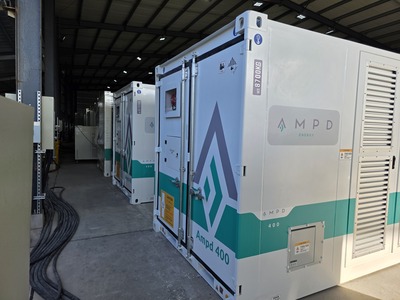
Ampd’s Chief Executive Officer, Anthony Stewart, said, “This is the latest stage in Ampd’s journey to modernise how heavy industrial sites access mobile power and support their energy transition. With these new products, we can now cater to higher energy use cases.
“Combined with a higher IP rating, this expands our deployment opportunities in construction and enables us to break into new industries. We see the new Ampd range empowering us to support a wide array of heavy industries, improve productivity, deliver strong commercials, and make a positive environmental impact.”
The global rollout of the NextGen products will continue throughout the year.
Industry transitions from gas to renewable heat: report
More than 230 Australian industrial sites and commercial buildings will have switched from gas to...
Industrial electricity costs could halve by sharing infrastructure
Heavy industry could reduce electricity costs by up to 50% by sharing renewable infrastructure...
$3m investment in microgrids for Far West communities
The project will scope assets required to generate and store energy locally for NSW communities...