Government policies bolstering China's renewable energy capacity
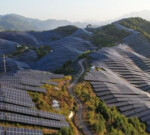
Research and consulting firm GlobalData has revealed that China’s renewable energy capacity increased from 27.8 GW in 2001 to 183 GW in 2013, and looks set to continue rising.
The company’s report - ‘Asia-Pacific Renewable Energy Policy Handbook 2014’ - presents an in-depth analysis of the renewable energy policies across the major countries in the Asia-Pacific (APAC) region. The report states that China’s emergence as a major player in the global renewable energy industry, and the leading country in the region, has been accelerated by a combination of government encouragement and market guidance.
“Soaring energy demand, expeditious industrialisation and international pressure to reduce greenhouse gas emissions have impelled China to increase its share of renewable energy,” said Harshavardhan Reddy Nagatham, GlobalData’s analyst covering alternative energy.
“The country has introduced feed-in tariffs (FiTs) at the state and provincial level in order to promote the development of alternative energy, which has contributed to substantial capacity additions over the last decade, especially those of wind and solar power. This growth is expected to continue thanks to the government’s ambitious targets for renewables.”
China is aiming to add 15 GW of solar photovoltaic (PV), 5 GW of wind, 0.53 GW of geothermal and 3.3 GW of biomass power by 2015, according to GlobalData.
“China’s National Energy Administration planned investment of around $39.5 billion for the development of solar power between 2011 and 2015,” said Nagatham. “The government instigated a number of major support measures, most notably the Golden Sun Program, the Building Integrated PV subsidy program and FiTs for solar projects, such as the ‘One Million Rooftops Sunshine Plan’ in the Shandong province.
“Consequently, the Chinese government revised the target for the cumulative installed capacity of its solar power to 35 GW by 2015, a considerable increase from the original target of 21 GW set in 2012. This will also contribute significantly to the growth of PV installations in the near future.”
GlobalData predicts that alternative sources are expected to account for more than 20% of the country’s total electricity generation by 2020.
UNSW HTH achieves highest sustainability rating
The 35,600-square-metre facility was developed to accelerate the translation of research and...
Fremantle Seaweed acquires onshore seaweed technology
The seaweed producer hopes to accelerate a path to commercial production by adding onshore...
Boral launches detailed carbon reporting capability
The company said the automated reporting capability eliminates the need to manually compile...