East Australian Current on science watch
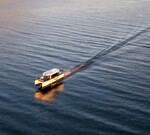
CSIRO oceanographers have embarked on a 10-day, $2 million research voyage they believe will generate the most complete profile yet of one of Australia’s most influential environmental features, the East Australian Current.
Working from the national marine research vessel Southern Surveyor, the scientists will deploy five deep water moorings across the current, extending 240 km east of Brisbane, to gain specific insights into the characteristics of the largest ocean current in the Australian region.
The moorings consist of sensors recording temperature, salinity and velocity of the current, spanning the region from the continental margin to offshore in water depths of nearly 5 km.
Principal investigators for the voyage are Hobart-based scientists Ken Ridgway and Dr Bernadette Sloyan, specialists in currents in the Australian region with CSIRO’s Wealth from Oceans Program.
Dr Sloyan said the East Australian Current impacts our climate and east coast ocean conditions and understanding its physical and chemical characteristics will be important for future natural resource management.
The mooring network is the latest addition to the Australian Government-funded Integrated Marine Observing System (IMOS), which has a strong focus on how offshore conditions influence our coasts via the major boundary currents like the East Australian Current.
Dr Sloyan said IMOS has provided $2m in funding to support the mooring network, which will complement existing IMOS observations being taken off the Great Barrier Reef, the New South Wales coast and the east coast of Tasmania.
“With this final piece of the jigsaw in place, we now have the ability to accurately measure transfer of water, heat and salt from the tropics to the Tasman Sea, to see how it is changing over time and to understand what these changes might mean for marine ecosystems and coastal populations along the eastern seaboard,” she said.
“This research voyage is a terrific opportunity to study the current and to understand its wider influences on our natural marine resources, and for many Australians living on the eastern seaboard its influence on their lifestyle,” said Ridgway.
Roadmap released for Australia's bamboo industry
Engineered bamboo in Australia could cut greenhouse gas emissions by about 430,000 tonnes by 2035...
Australia now more at risk from climate pollution
Australians remain dangerously exposed and ill-prepared for the risks outlined in the 2025...
Biodiversity Standard launched to improve nature outcomes
The launched Standard was developed under the ENVOMARK Value Nature Framework, which assures...