Australian scientists revolutionise processing of starch
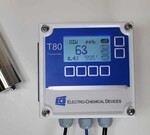
Australian scientists have developed an analyser that will monitor the behaviour of starches as they are cooked, revolutionising food manufacturing processes. The neutron Rapid Visco Analyser or nRVA will allow manufacturers to establish the best way to cook and process starches.
Innovation Minister Senator Kim Carr congratulated scientists at the Australian Nuclear Science and Technology Organisation (ANSTO) who worked with manufacturer Perten Instruments to develop the nRVA.
“This discovery could mean manufacturers will be able to make food more efficiently, with lower energy input. It also gives manufacturers the power to consistently create starches with known health benefits, like those that have been proven to help counter bowel cancer.
“The nRVA uses neutrons from ANSTO’s OPAL research reactor at Lucas Heights to enable manufacturers to better understand food at the molecular level,” Senator Carr said.
“Scientists employing neutron-scattering techniques have been able to see how starches change when they’re cooked.
“This is a great example of collaboration between scientists and industry resulting in a new technology with the potential to benefit Australia.”
Dr Elliot Gilbert, food science project leader at ANSTO explained that the nRVA analyses small samples - often of starch - under controlled test routines.
“This is not a question of irradiating food but of exploring the properties of starch down to the molecular level. The nRVA could radically improve food manufacturing processes like measuring flour and grain quality for breakfast cereals, snack and animal foods,” Dr Gilbert said.
Boral launches detailed carbon reporting capability
The company said the automated reporting capability eliminates the need to manually compile...
Epson MD serves meals for CEO CookOff
The OzHarvest CEO CookOff will bring together business leaders, chefs and corporate teams to...
World record set for large-scale perovskite PV efficiency
UNSW has collaborated with a high-tech energy company to set a benchmark for 676 cm2...