F-Gas Regulation: Turning necessity into opportunity
By Sandra Kraft, Senior Manager Group Marketing, technotrans
Wednesday, 28 January, 2026
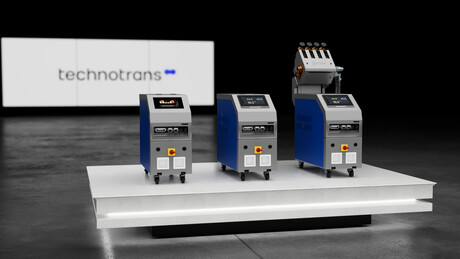
The tightening of the F-Gas Regulation is creating uncertainty across many industries. Deadlines are approaching, and the question of the right refrigerant strategy is becoming increasingly urgent. What may initially appear to be a regulatory burden also represents a strategic opportunity — for greater efficiency, lower operating costs and long-term investment security.
As a leading specialist in thermal management, technotrans has been supplying cooling and temperature control solutions using natural refrigerants to customers for many years. Drawing on this experience, the company demonstrates how businesses can successfully manage the transition and turn regulatory necessity into a clear competitive advantage.
The era of synthetic refrigerants is coming to an end. EU Regulation 2024/573, which entered into force in March 2024, significantly tightens the rules governing fluorinated greenhouse gases (F-gases) and requires system operators to take action. A key element is the so-called “phase-down”, which will gradually reduce the available quantities of partially fluorinated hydrocarbons (HFCs) to zero by 2050.
For industrial companies, this already has tangible implications. From a legal perspective, existing systems containing F-gases may continue to be operated and serviced. However, the phase-down is leading to increasing scarcity of service refrigerants such as R134a or R407C. This inevitably results in rising prices and potential supply bottlenecks. As a consequence, reliable life-cycle cost planning for existing installations becomes more difficult. Maintenance and servicing costs for legacy systems are therefore turning into a volatile cost factor.
At the same time, the regulation sets clear deadlines for placing new systems on the market. From 2027 onwards, strict GWP limits will apply to many applications. The Global Warming Potential (GWP) indicates the extent to which a refrigerant contributes to global warming compared with carbon dioxide (CO2), which serves as the reference with a GWP value of 1. The higher the GWP value, the greater the environmental impact in the event of a release into the atmosphere. From 2032, a far-reaching ban on most F-gases will follow. Regulatory pressure is also increasing internationally, for example through the AIM Act in the United States.
“The current F-Gas Regulation creates an irreversible reality,” explained Karsten Revers, Head of Engineering at technotrans SE. “Many of our customers are looking for a long-term, reliable solution that will not be affected by further regulatory changes within just a few years. This is precisely where natural refrigerants provide the planning and investment security required.”
Future-proof solutions with natural refrigerants
Among the available natural refrigerants, propane (R290) has established itself as a highly efficient and sustainable solution for industrial thermal management systems. The favourable thermodynamic properties of hydrocarbons such as propane include high specific cooling capacity and efficiency. Independent scientific studies show that modern systems optimised for R290 can achieve an approximately 20% higher coefficient of performance (COP).
In practical operation, variable-speed R290 systems deliver significant energy savings and noticeably reduce operating costs. This economic advantage is further enhanced by attractive public funding schemes. In Germany, for example, the Federal Office for Economic Affairs and Export Control (BAFA) provides funding exclusively for investments in refrigeration systems using non-halogenated, natural refrigerants.
“For many companies, subsidies are a decisive factor that makes investment even more attractive. That is why we actively support our customers and reduce entry barriers through targeted consulting,” Revers said.
Another key advantage is long-term security. With a GWP value of 0.02, R290 is exempt from the F-Gas Regulation. Investing in a system using this refrigerant therefore offers a high level of planning and legal certainty throughout the entire system life cycle. At the same time, users significantly reduce their carbon footprint. From a safety perspective, the use of R290 is also unproblematic. Modern system designs featuring hermetically sealed refrigerant circuits, minimal refrigerant charges and integrated safety sensors effectively minimise potential risks.
Clear installation rules and proven safety concepts
Installation follows clear and straightforward rules. For preferred outdoor installation, only defined safety distances from building openings (windows, doors, ventilation inlets) and potential ignition sources must be maintained. For indoor installation, the decisive criterion is that, in the event of a leak, the refrigerant concentration in the room air remains well below the lower flammability limit (LFL). This is ensured by maintaining an appropriate ratio between refrigerant charge and room volume.
“Safety is a central concern for our customers,” Revers added. “That is why our safety concept does not end with the machine itself. We support installation and operation with comprehensive training and individual support. This builds confidence and ensures safe handling of natural refrigerants in demanding industrial environments.”
Proven systems in operation for many years
As one of the first manufacturers worldwide, technotrans introduced series-produced thermal management solutions using R290 in the early 2020s and has since been systematically converting its product portfolio.
“From our day-to-day collaboration with customers, we know that the transition is far more than a purely technical decision. Our sales teams provide holistic support — from needs analysis and customised system solutions through to commissioning and service,” Revers emphasised.
Many years of practical experience show that investments in R290 technology often pay for themselves within a short period of time thanks to energy savings and available funding.
“This turns regulatory necessity into a genuine competitive opportunity,” Revers said.
Today, technotrans solutions are used across numerous industries including plastics processing, printing and laser technology, as well as medical technology. Depending on cooling requirements, systems range from compact, integrable OEM assemblies to high-performance central container systems in the megawatt range.
Scalable solutions for diverse requirements
The breadth of the technotrans portfolio demonstrates how flexibly R290 technology can be scaled to meet a wide variety of requirements. Units in the modular ECOtec.chiller xtend series, for example, offer high power density and can be expanded flexibly. They are ideally suited for supplying entire production halls and provide additional efficiency benefits through options such as free cooling and heat recovery. technotrans also offers R290-based heat pumps for heat recovery applications.
The PRO300.chiller, by contrast, is specifically designed for integration into OEM systems. In a compact 19-inch slide-in format, it delivers precise temperature control for highly sensitive applications such as lasers, analytical equipment and medical systems. The p1000 series is even more compact and is based on advanced miniature compressor technology. This provides high cooling capacity within the smallest possible footprint. These highly integrable OEM assemblies demonstrate that the advantages of R290 can also be leveraged for small, decentralised and mobile applications.
With these proven solutions and a global service network, technotrans offers companies the security they need not only to master technological transformation, but also to generate tangible added value.
Outlook: digitalisation and sustainability remain key factors
Future thermal management will become increasingly digital, modular and energy-efficient. Intelligent control systems enable proactive system monitoring and optimisation of operating parameters, reducing both energy consumption and the risk of downtime. At the same time, heat recovery and hybrid energy concepts are gaining importance in supporting sustainable production processes holistically.
technotrans is already developing scalable solutions with integrated monitoring today, ensuring that customers will continue to benefit from reliable, resource-efficient thermal management systems in the future — and actively shaping the path towards a more climate-friendly industry.
For further information, visit the technotrans website.
Co-digesting textile and food waste could create renewable methane
Researchers have found that co-digesting textile waste with food waste can improve methane...
Study assesses recycled content use in home builds
Using a completed dwelling, the study explored how the percentage of recycled content use can be...
Beyond compliance: why ESG in construction is becoming a people issue
The shift comes as the industry faces significant workforce pressures, with skilled labour...