Govt solar scheme expansion reduces installation costs
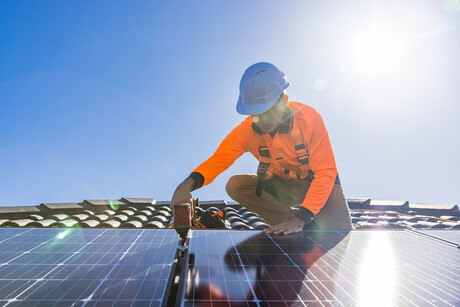
The Australian Government has announced the expansion of the Small-scale Renewable Energy Scheme (SRES) to help reduce the cost for businesses, farms and community organisations to install medium-sized solar systems.
The scheme will be expanded from 100 kW to 1 MW, allowing organisations to install solar systems up to 10 times larger, while slashing the cost of installation by around 20%.
The government said this reform means more regional and remote areas will have access to clean, reliable and affordable solar energy — with community groups, schools, hospitals, farms and businesses able to secure the discount.
Network connection processes for mid-scale solar projects will also be improved, according to the federal government, through targeted rule change requests and enhancements to the existing framework.
“One in three Australian homes have rooftop solar, but larger energy users have been locked out because the existing solar rebate only supports systems up to 100 kW,” said Minister for Climate Change and Energy Chris Bowen.
“We’re fixing that by expanding support to systems up to 1 MW, unlocking the potential of commercial rooftops and helping businesses cut power bills, invest in growth and create jobs.”
Climate Council CEO Amanda McKenzie welcomed the expanded scheme, saying, “Australia is a solar powerhouse and the Albanese government just gave it a turbo boost.
“Australia’s warehouses, factories and barns have wide roofs with huge potential to generate home-grown power.
“It means that a farmer or manufacturer saves on installing solar panels — then receives huge reductions in electricity bills as they generate power from sunshine.
“For the Australian community this means less climate pollution and lower demand on the grid. It’s win-win.”
FCA farmer spokesperson and Harden sheep and cropping farmer Peter Holding said the discount will give farmers the chance to shield themselves against volatile global fuel markets.
“This discount will help farmers’ shed roofs power a lot of farms,” Holding said.
“A good solar system helps shield the farm from those global energy markets we can’t control. War in Ukraine and Iran can’t send your power bill up so much if you’re producing your own power from your own solar and storing it in your own battery. Farmers and industrial businesses have huge areas of roof space and Australia has more sun than any other country — let’s use it.”
Solar Citizens also strongly welcomed the announcement, with Solar Citizens Senior Campaigner Alia Armistead saying, “Removing barriers and increasing incentives for big commercial and public roofs to install large solar systems is a huge opportunity to cut energy costs for businesses and community organisations, and to bring down wholesale electricity prices and energy bills for everyone.
“Large commercial, industrial and public roofs are a massive missing piece in our renewable energy capacity. Reports by Nexa Advisory and the Institute for Energy Economics and Financial Analysis assessed that there is massive potential while less than 6 GW is currently installed.
“Filling these big roofs with solar panels will save businesses money on their electricity bills, and push down wholesale prices for all within existing network capacity.”
The federal government hopes the expanded scheme will deliver reduced energy costs to organisations smoothly as it is a pre-existing and proven scheme.
“This will help manufacturers, farmers, retailers, logistics centres, schools, hospitals and community organisations reduce energy costs — and it uses an existing, proven scheme, meaning no new bureaucracy or red tape,” Bowen said.
The expanded scheme is expected to commence from 1 October 2026, subject to necessary regulations.
$2.5m to double circuit breaker production in Adelaide
The investment will help establish a new smart circuit breaker production line at a Gepps Cross...